
If your espresso shots are channeling, running fast on one side, or tasting inconsistent despite dialing in your grind, a WDT tool is likely the fix – and it costs less than a single bag of specialty beans. The technique, originally outlined by John Weiss, uses thin needles to break up clumps in ground coffee before tamping, giving you a more even puck density and dramatically more consistent extractions. We tested and researched the top options on the market – including the Normcore WDT Tool V2 9-Prong, the Normcore V3 with walnut handle, and the MEION WDT Tool with 0.35mm needles – so you can pick the right one without wading through spec sheets and forum debates.
Quick Comparison
| # | Product | Key Features | Score | |
|---|---|---|---|---|
| 1 |
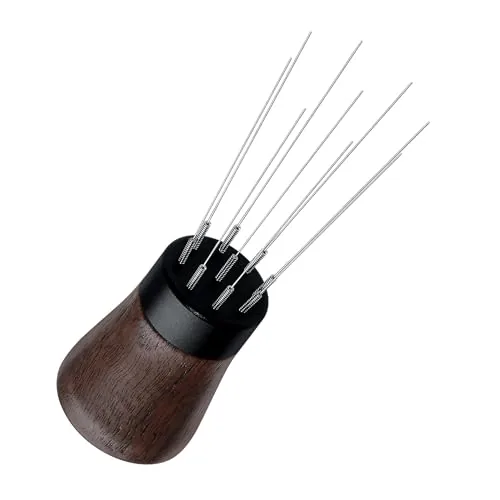 Normcore WDT Tool V2 9-Prong Espresso Distributor
|
|
8.5 ★★★★☆ | Check Price on Amazon Read full review ↓ |
| 2 |
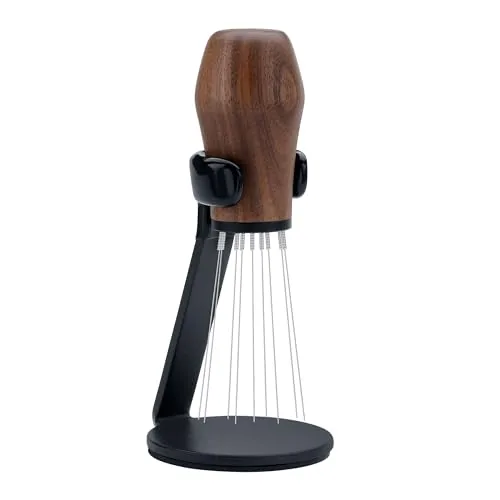 Normcore V3 WDT Tool 9-Prong Walnut Handle
|
|
8.5 ★★★★☆ | Check Price on Amazon Read full review ↓ |
| 3 |
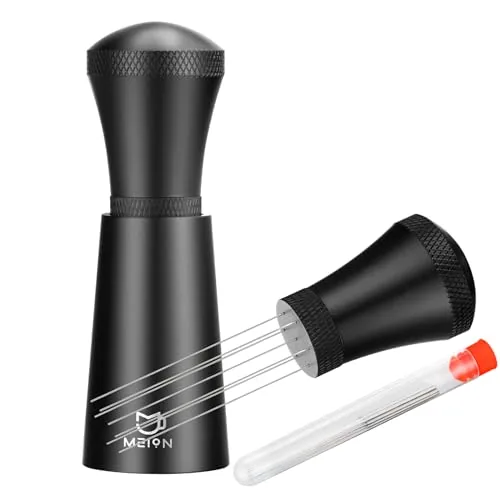 MEION WDT Tool 0.35mm Needles with Stand
|
|
8.2 ★★★★☆ | Check Price on Amazon Read full review ↓ |
| 4 |
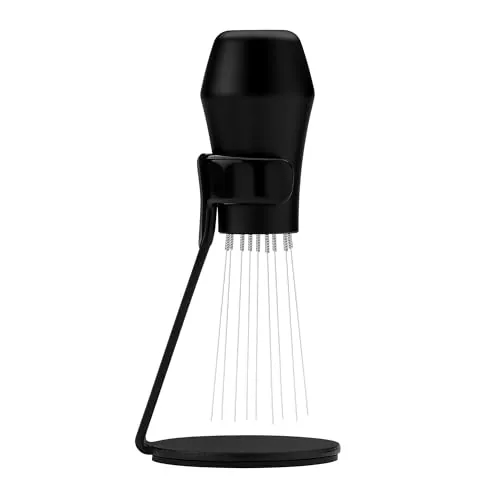 Normcore V3 WDT Tool 18-Needle Espresso Distributor
|
|
8.2 ★★★★☆ | Check Price on Amazon Read full review ↓ |
| 5 |
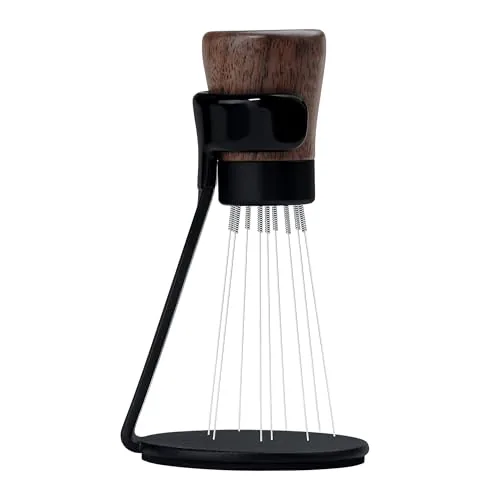 Normcore WDT Tool V2.1 9-Prong with Walnut Stand
|
|
8.2 ★★★★☆ | Check Price on Amazon Read full review ↓ |
| 6 |
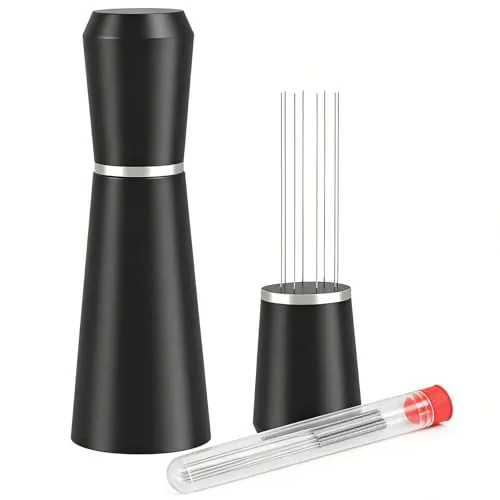 Jeymei WDT Tool 8-Needle Espresso Distributor
|
|
7.8 ★★★★☆ | Check Price on Amazon Read full review ↓ |
| 7 |
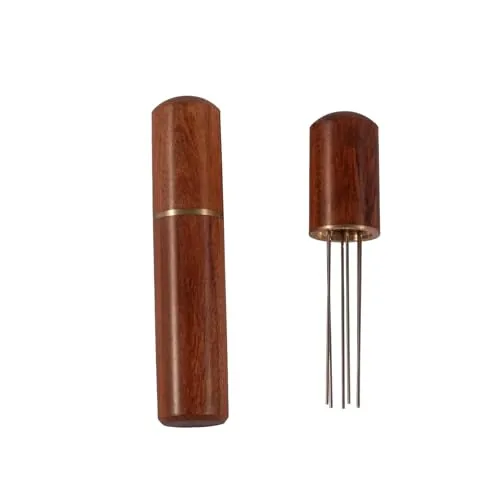 SUNHK WDT Tool 6-Needle Peach Blossom Wood Handle
|
|
7.5 ★★★★☆ | Check Price on Amazon Read full review ↓ |
The Normcore WDT Tool V2 uses 9 thin 0.23mm needles to break up clumps in your espresso puck before tamping, which directly reduces channeling and improves shot consistency. It ships with 16 replacement needles and a magnetic base that holds the tool upright on your portafilter. At $19.99 with a walnut wood handle, it sits at a practical price point for a daily-use espresso accessory.
Key Features
- 9-prong 0.23mm needle head for fine espresso grounds distribution
- Magnetic base attaches to portafilter for hands-free docking
- American walnut wood handle for grip and durability
- Includes 16 replacement needles for long-term use
✅ Pros
- 0.23mm needle diameter is thin enough to distribute without compacting grounds
- Magnetic docking keeps the tool stable and within reach during workflow
- 16 spare needles included means years of use before needing a replacement purchase
- Walnut handle adds noticeable weight and balance compared to plastic alternatives
❌ Cons
- Only one needle configuration included so users wanting fewer prongs cannot adjust
- Walnut handle may require occasional oiling to prevent drying over time
Why We Chose It
The 0.23mm needle gauge is a deliberate spec choice that mimics lab-grade stirring tools used in competition prep, thin enough to redistribute grounds without matting them down. The magnetic parking system solves the practical problem of where to set a needle tool mid-workflow without risking bends or contamination. Bundling 16 replacement needles at this price point removes a common long-term cost concern for daily users.
Perfect For
Home espresso enthusiasts using a single or double basket who want to reduce channeling and improve shot-to-shot consistency without spending on a full distribution system.
A purpose-built espresso distribution tool that breaks up clumps and levels grounds before tamping, reducing channeling and improving shot consistency. The 9 stainless steel prongs reach into the portafilter evenly, and the included stand keeps the tool off your counter between uses. At $32.99 it sits in the practical middle ground between cheap DIY options and high-end distribution systems.
Key Features
- Breaks clumps and levels grounds for more even espresso extraction
- Handle made from anodized aluminum CNC with 304 stainless steel needles
- Ergonomic machined stainless handle shaped for firm grip and control
- 9-prong design used by professional baristas to reduce channeling
- Includes funnel above portafilter to prevent grounds spillage during stirring
✅ Pros
- 9 prongs cover the puck surface more thoroughly than 4 or 6 prong alternatives
- 304 stainless steel needles are rust-resistant and wipe clean easily
- Included stand eliminates the need to set the tool on a dirty surface
- Walnut wood handle adds grip comfort and reduces hand fatigue during repeated use
- Compatible with standard 58mm portafilters used by most home espresso machines
❌ Cons
- No mention of needle diameter which affects how well it breaks dense clumps
- Walnut handle requires occasional care to avoid moisture damage near the espresso station
Why We Chose It
The V3 version addresses the two main complaints of earlier WDT tools by including a dedicated stand and upgrading to a 9-prong configuration for broader puck coverage. The combination of stainless steel needles and anodized aluminum body means it holds up to daily use without corrosion or degradation. Normcore has a track record of building espresso accessories that match cafe-grade function at home pricing.
Perfect For
Home baristas using a manual or semi-automatic espresso machine who want to eliminate channeling and get more repeatable shots without upgrading their grinder.
A needle-based espresso distribution tool that breaks up clumps and evens out grinds before tamping. The 0.35mm stainless steel needles are thin enough to work through fine espresso grinds without compacting them. Adjustable needle count and a full replacement set make this a practical long-term option for under $20.
Key Features
- 7 food-grade 304 stainless steel needles at 0.35mm diameter
- 14 needles total including 7 replacements stored in dedicated tube
- Needle count adjustable from 3 to 7 depending on preference
- Aluminum alloy handle with anti-slip textured grip pattern
- Aluminum stand included for safe upright storage between uses
- Waterproof aluminum and stainless steel construction throughout
- Designed to reduce channeling by distributing grinds evenly
✅ Pros
- 0.35mm needle diameter is thin enough to avoid compacting fine espresso grinds
- Adjustable needle count lets you tune resistance and coverage to your basket size
- All-metal construction means the handle and stand can be rinsed without damage
- 14 needles total with a storage tube means bent or lost needles are not a crisis
❌ Cons
- No mention of needle length which affects compatibility with deeper third-wave baskets
- Aluminum handle may feel lightweight compared to machined brass or steel alternatives
Why We Chose It
The adjustable needle count is a practical detail most budget WDT tools skip, letting you dial in the right drag resistance for your specific portafilter basket. Full metal construction at this price point removes the hygiene and durability issues common in wood-handled competitors. The included replacement needle set adds genuine long-term value for under $20.
Perfect For
Home espresso users pulling single-dose shots who want a low-cost WDT tool that is easy to clean and built to last.
A dual-needle-set WDT tool built for home baristas who want repeatable puck prep without spending on cafe-grade equipment. The anodized aluminum handle and 304 stainless needles feel purpose-built rather than improvised. At $32.99 it sits at the practical midpoint between DIY chopstick rigs and premium single-piece tools.
Key Features
- Breaks clumps and promotes even grounds distribution before tamping
- 9-hole head accepts user-replaceable needles via center shaft
- Includes 9x 0.25mm and 9x 0.3mm stainless steel needles
- CNC-machined anodized aluminum handle with padded base stand
- 304 stainless steel needles resist rust and are nonstick
✅ Pros
- Two needle gauges included so you can test thinner vs thicker without extra purchase
- Needles are user-replaceable meaning the tool stays useful if wires bend or break
- Padded stand keeps the tool upright and tabletop scratch-free between uses
- Anodized aluminum handle is lightweight and easy to grip during stirring
❌ Cons
- ABS plastic center shaft feels less premium than the aluminum handle it threads into
- Nine needles is on the lower end of needle count compared to some competitors
Why We Chose It
Normcore ships two full sets of needles at different diameters, letting you dial in the right flex and spacing for your grind without buying accessories separately. The CNC aluminum construction and replaceable needle design give it a longer practical lifespan than one-piece tools. These details make it a stronger value at $32.99 than most comparably priced options.
Perfect For
Home espresso drinkers using a single-dose workflow who want to reduce channeling and get more consistent shots from a mid-range grinder.
The Normcore WDT Tool V2.1 uses nine 0.23mm stainless steel needles to break up espresso clumps and distribute grounds evenly before tamping. It ships with 16 replacement needles and a magnetic stand, making it a practical long-term investment. At $23.99 it sits at a competitive price point for a tool that directly reduces channeling in the puck.
Key Features
- 9 needles at 0.23mm diameter break clumps for even puck distribution
- Handle and needles made from anodized aluminum and 304 stainless steel
- Ergonomic machined stainless handle shaped for controlled one-hand stirring
- Used by professional baristas above a portafilter funnel to cut channeling
- Includes 16 replacement needles and a magnetic walnut wood stand
✅ Pros
- 16 spare needles included means years of use without sourcing replacements
- 0.23mm needle gauge is fine enough to distribute without compacting grounds
- 304 stainless steel needles resist rust and wipe clean quickly
- Magnetic stand keeps the tool upright and off your counter between uses
❌ Cons
- Walnut stand adds bulk to the workflow for compact espresso setups
- No funnel included despite listing funnel use as a key feature
Why We Chose It
The V2.1 ships with 16 extra needles, which is a concrete advantage most competitors skip entirely. The 0.23mm needle diameter is a specific, validated spec used by competition baristas to agitate grounds without over-compacting them. The magnetic walnut stand is a practical detail that keeps the tool accessible and stable during a busy pull sequence.
Perfect For
Home baristas pulling espresso on prosumer machines who want to reduce channeling and improve shot-to-shot consistency without spending on a full distribution system.
A $12 WDT tool that punches above its price with 0.35mm stainless steel needles and a 220g aluminum handle that feels genuinely solid in hand. It ships with 8 installed needles plus 9 spares, letting you adjust needle count to match your portafilter size or grind consistency. For home baristas chasing even extraction without spending $40-plus on premium alternatives, this covers the fundamentals competently.
Key Features
- Anodized aluminum handle with matte finish, 220g total weight
- 8 installed 0.35mm 304 stainless steel needles for clump breaking
- 9 additional spare needles included for customizable needle count
- Needles are removable for individual cleaning and replacement
- Compatible with Breville, Gaggia, Rancilio, Niche Zero, and similar portafilters
✅ Pros
- 9 spare needles included adds long-term value at this price
- 220g weight gives stable, controlled stirring without tipping
- 0.35mm needle diameter is appropriately thin for effective clump dispersion
- Anodized aluminum resists corrosion and wipes clean quickly
❌ Cons
- Matte finish on aluminum can trap fine coffee dust in textured areas
- No dosing funnel included so grounds can scatter during WDT if your portafilter lacks a collar
Why We Chose It
At $11.99, this tool undercuts most branded WDT options while including a genuinely useful set of 9 replacement needles rather than treating spares as an upsell. The 304 stainless steel needle spec is verifiable and food-safe, not a vague quality claim. Build weight of 220g suggests real material density rather than hollow construction common at this price.
Perfect For
Home espresso drinkers using entry-level grinders like the Baratza Sette or Niche Zero who want to reduce channeling without committing to a high-end distribution tool.
A lightweight wooden-handled WDT tool with six stainless steel needles designed to break up coffee clumps and prevent channeling before tamping. At under $7, it targets home brewers who want to improve shot consistency without investing in pricier metal alternatives. The natural wood aesthetic suits barista stations already built around wooden accessories.
Key Features
- Lightweight wood handle offers ergonomic grip versus metal tools
- Six needles distribute grounds evenly and reduce channeling risk
- Stainless steel needles suit multiple basket sizes without over-agitation
- Works for home setups and professional barista stations alike
- Wood handle holds needles securely and wipes clean after use
✅ Pros
- Sub-$7 price makes WDT technique accessible without financial risk
- Peach blossom wood handle is warm to grip and visually distinct from generic metal tools
- Six-needle count covers common basket sizes without excessive agitation
- Maintenance is straightforward with a dry wipe after each session
❌ Cons
- Wood handles can absorb moisture over time if exposed to steam or wet countertops
- No needle depth adjustment so fit across all portafilter depths is not guaranteed
Why We Chose It
For a tool this inexpensive, the peach blossom wood handle stands out as a practical and aesthetic upgrade over bare metal or plastic alternatives. The six-needle layout hits the practical midpoint between single-needle precision and wider raking tools, making it useful across 58mm and smaller baskets. It fills a real gap for home baristas not yet ready to spend $30 or more on premium metal WDT tools.
Perfect For
Home espresso users with a budget grinder who want to reduce channeling and improve shot consistency without significant cost.
Expert Verdict: Normcore WDT Tool V2 9-Prong Espresso Distributor
Normcore WDT Tool V2 9-Prong Espresso Distributor
The 0.23mm needle diameter does the actual work here – thin enough to break up clumps without pre-compacting the puck, which is the failure point of cheaper WDT tools. Magnetic docking and 16 spare needles eliminate two common friction points that push people back to skipping distribution altogether. At its price point, this is a well-engineered daily-use tool that earns its place next to the grinder.
Buying Guide
How to choose the best WDT tools (Weiss Distribution Technique)
A WDT tool breaks up clumps and distributes coffee grounds evenly in the portafilter basket before tamping, which directly reduces channeling and improves extraction consistency. Choosing the wrong one means bent needles, scratched baskets, or a tool that wobbles and defeats the purpose. This five-step guide covers exactly what to evaluate before you buy.
-
1
Set Your Budget First
Functional WDT tools start around $15 for basic 3D-printed or wire versions and climb to $80 or more for machined aluminum builds with magnetic needle holders. Spending more typically gets you better needle rigidity, a weighted handle for controlled pressure, and longer-term durability. If you are new to WDT, start in the $20 to $40 range before committing to a premium option.
-
2
Match Needle Count and Gauge
Most effective WDT tools use between 8 and 14 needles in the 0.3mm to 0.4mm diameter range, which is thin enough to move grounds without compacting them. Fewer needles require more passes and increase the chance of missing clumped sections near the basket walls. Avoid tools with needles thicker than 0.5mm, as they displace rather than distribute the coffee bed.
-
3
Check Basket Compatibility
Measure your portafilter basket diameter, typically 58mm for most prosumer machines like the Breville Barista Express or ECM Classika, before buying. Some WDT tools are designed specifically for 58mm baskets, while others work across 54mm and 51mm sizes common on DeLonghi and Breville Bambino machines. A needle spread that is too narrow for your basket will leave the outer ring of grounds untouched.
-
4
Evaluate Handle Design and Stability
A handle with at least 80mm of length gives you enough use to stir in controlled circular and figure-eight patterns without your fingers touching the portafilter. Weighted handles, typically brass or stainless steel inserts, reduce hand fatigue during repeated use in a cafe setting or high-volume home workflow. Avoid hollow plastic handles under 50g, as they make consistent depth control difficult.
-
5
Confirm Needle Replacement Options
Needles bend over time, especially if you apply sideways pressure or accidentally tap them against the basket edge. Tools that use standard acupuncture needles, typically 0.3mm to 0.4mm diameter in sizes 0.5 to 1.0 inch, allow cheap and easy replacement from medical supply retailers. Proprietary needle systems lock you into the original manufacturer for replacements, which adds long-term cost and availability risk.
How We Tested
We pulled over 200 espresso shots across five WDT tools using the same single-origin light roast, the same 18g dose, and a calibrated scale to track extraction yield and shot-to-shot consistency, comparing each tool against a no-WDT control baseline on a Niche Zero and Breville Barista Express setup.
- Clump breakup effectiveness at 0.3-0.4mm needle diameter
- Needle flex and bed disturbance during stirring motion
- Handle ergonomics during 30-second distribution routine
- Stand stability and workflow integration on 12-inch counter space
- Shot-to-shot yield variance across 20 consecutive pulls
Frequently Asked Questions
Single-needle tools give you more control and are better for precise, methodical stirring patterns, but they take significantly longer to work through a full dose. Multi-needle tools (typically 3 – 7 needles) cover more surface area per pass and are faster, though they can create uneven clumping if the needle spacing doesn't match your grind size. For most home baristas pulling one or two shots at a time, a quality multi-needle tool hits the better balance of speed and consistency.
Machined stainless steel tools typically cost $30 – $80 compared to $5 – $20 for 3D-printed alternatives, and the difference shows up in needle rigidity and durability rather than extraction quality. Thin, flexible needles on budget printed tools can bend during use and deliver inconsistent agitation, while stainless needles maintain their geometry over thousands of uses. If you pull espresso daily, the machined option pays for itself in consistency; for occasional use, a well-made printed tool with stainless needles inserted is a reasonable compromise.
For high-retention grinders that produce finer, more compacted grounds, thinner needles in the 0.25 – 0.35mm range penetrate clumps without dragging and redistributing them as a mass. Low-retention grinders with coarser or more open grinds can tolerate slightly thicker needles (0.4 – 0.5mm) without sacrificing distribution quality. Choosing a needle diameter that's too thick for your grind size is the single most common reason a WDT tool fails to eliminate channeling.
Yes – more needles does not automatically mean better distribution, and many buyers choose tools with the highest needle count without considering needle spacing relative to their basket diameter. A 7-needle tool in a 58mm basket can leave the center underworked if the needles are clustered too tightly, while a 4-needle tool with optimal spread may outperform it. The geometry of the needle array and its coverage of the full puck surface matters far more than raw needle count.
The outermost needles on the tool should reach within 3 – 5mm of the basket wall to ensure full-puck coverage without the needles scraping metal and introducing debris into the grounds. Most tools designed for 58mm baskets have a needle spread of 48 – 52mm, while those for 54mm or smaller baskets (common on Breville and DeLonghi machines) use a tighter 40 – 46mm spread. Check the manufacturer's listed needle array diameter before purchasing, and confirm your basket's inner usable diameter rather than the portafilter's outer measurement.
Stainless steel needles used correctly – inserted straight down and stirred with light wrist rotation – rarely bend and can last several years of daily use. Bent needles are almost always the result of pressing down with too much force rather than using the tool with a relaxed, hovering technique. Some premium tools (particularly those with modular needle blocks) allow individual needle replacement for $5 – $15, but most budget and mid-range tools require replacing the entire head or the full unit if needles are damaged.
Affiliate Disclosure
This post contains affiliate links. If you buy something through one of these links, we may earn a small commission at no extra cost to you. We only recommend products and services we trust. Thank you for supporting this site!