
If you want real control over your espresso shot, a manual machine puts the pressure, timing, and technique entirely in your hands – which is exactly why serious home baristas prefer them over fully automatic options. After testing the best manual espresso machines across a range of budgets and brewing methods, three stood out: the Flair 49 PRO, a no-plastics lever machine built for precision; the CASABREWS CM5418, a compact 20-bar electric-assist option for smaller kitchens; and the Primula 6-Cup Moka Pot, a stovetop classic that delivers strong, concentrated coffee without any electricity. Whether you’re chasing café-quality pulls or just want a reliable morning brew with fewer moving parts, this guide breaks down exactly which machine fits your setup.
Quick Comparison
| # | Product | Key Features | Score | |
|---|---|---|---|---|
| 1 |
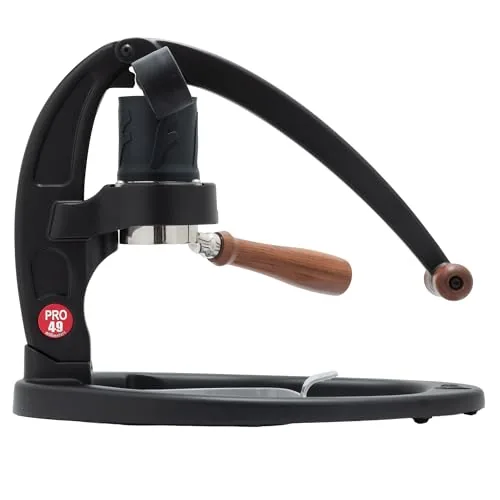 Flair 49 PRO Manual Lever Espresso Maker No Plastics
|
|
8.4 ★★★★☆ | Check Price on Amazon Read full review ↓ |
| 2 |
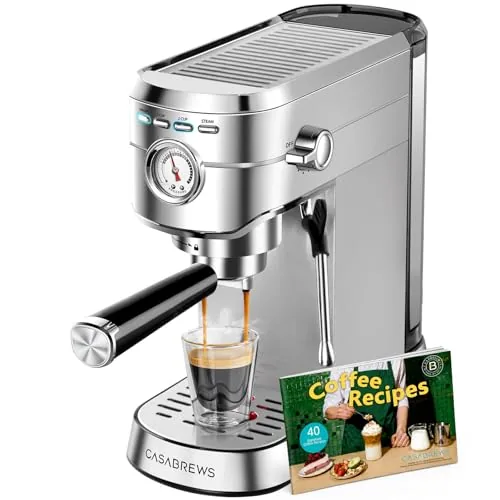 CASABREWS CM5418 20 Bar Compact Espresso Machine
|
|
7.8 ★★★★☆ | Check Price on Amazon Read full review ↓ |
| 3 |
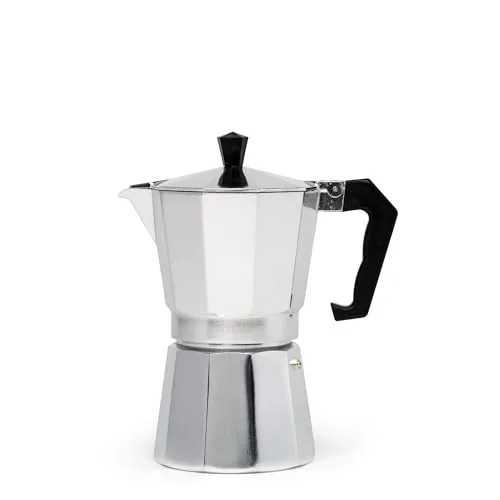 Primula Moka Pot 6-Cup Cast Aluminum Stovetop Maker
|
|
7.8 ★★★★☆ | Check Price on Amazon Read full review ↓ |
| 4 |
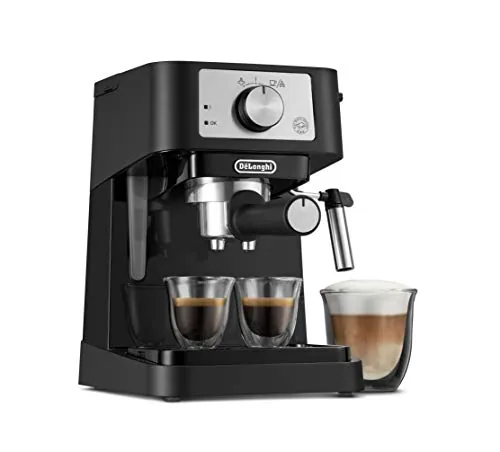 De'Longhi Stilosa Espresso Machine 15 Bar Pump
|
|
7.8 ★★★★☆ | Check Price on Amazon Read full review ↓ |
| 5 |
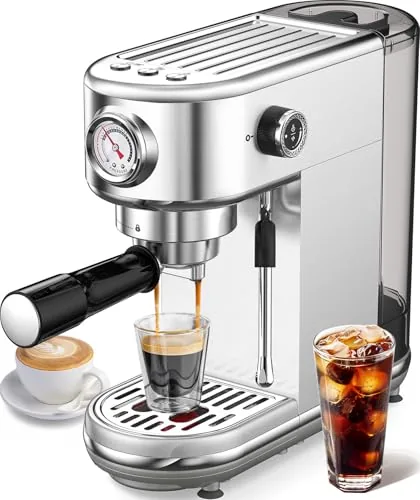 atatix Espresso Machine 20 Bar with Steam Wand
|
|
7.5 ★★★★☆ | Check Price on Amazon Read full review ↓ |
The Flair 49 PRO puts full extraction control in your hands through a direct lever mechanism with a real-time pressure gauge calibrated to the 5-9 BAR espresso range. The 49mm portafilter runs deeper and narrower than standard 58mm systems, giving beginners more dial-in forgiveness while still rewarding experienced baristas with a full-bodied shot. At $359 it competes directly with entry-level semi-automatics while occupying roughly 12 by 8 inches of counter space.
Key Features
- Direct lever mechanism translates your force into brew pressure
- 49mm portafilter is deeper and narrower than standard 58mm systems
- Stainless steel cylinder, valve, and stem keep plastics out of brew path
- Integrated pressure gauge marks the 5 to 9 BAR espresso zone
- Footprint measures approximately 12 inches long by 8 inches wide
- Includes both pressurized basket for beginners and bottomless basket for experts
✅ Pros
- No plastic contacts brew water, full stainless steel brew path
- Pressure gauge gives real-time feedback for consistent 9 BAR shots
- Dual basket system works with pre-ground coffee or precision grinders
- Compact footprint fits counters where semi-automatics cannot
- 49mm format is more forgiving to dial in than wider portafilters
❌ Cons
- Requires a separate kettle and heating step, slower workflow than semi-automatics
- 49mm basket size limits compatibility with third-party accessories and tampers
Why We Chose It
The Flair 49 PRO stands out because it removes plastics entirely from the brew path, a meaningful distinction at this price point that most electric machines at double the cost cannot match. The integrated pressure gauge is calibrated specifically to the espresso range rather than a generic 0-15 BAR scale, which makes it genuinely useful for shot profiling rather than decorative. The included pressurized basket also lowers the barrier to entry without removing capability for advanced users.
Perfect For
Home baristas who want tactile control over espresso extraction and care about material purity but do not want to spend upward of $600 on a semi-automatic machine.
The CM5418 delivers genuine espresso extraction at a sub-$140 price point, with a built-in pressure gauge that lets you dial in shots rather than guessing. The steam wand produces real microfoam for lattes and cappuccinos, not just airy froth. At roughly 34oz tank capacity, it handles a small household’s morning routine without constant refilling.
Key Features
- 20 bar Italian pump with 1350W boiler for full extraction
- Built-in pressure gauge shows live brew pressure in real time
- Steam wand capable of producing microfoam for latte art
- Compact stainless steel body fits counters of any size
- 34oz removable water tank supports multiple consecutive shots
- Includes portafilter, single and double shot baskets, tamper, and spoon
- Machine requires cool-down between frothing and brewing cycles
✅ Pros
- Visible pressure gauge removes guesswork from shot calibration
- Includes all necessary accessories out of the box
- Compact footprint suits small kitchens and office counters
- 34oz tank reduces refill frequency for multi-cup households
❌ Cons
- Must fully cool down between milk frothing and brewing, adding wait time
- 20 bar rating exceeds the 9 bar standard, so actual usable pressure depends on pump regulation
Why We Chose It
At $139.99, the CM5418 includes a pressure gauge that most competitors omit at this price tier, giving you a concrete way to troubleshoot and improve your shots. The full accessory bundle means no immediate add-on purchases. Build quality uses stainless steel rather than the all-plastic construction common in this price range.
Perfect For
Home users who want to pull real espresso shots and steam milk without spending over $200 on entry-level equipment.
A straightforward cast aluminum moka pot that brews six demitasse cups of strong espresso-style coffee directly on your stovetop. At under $16, it covers the basics without unnecessary complexity. Works across gas, electric, ceramic, and propane burners, making it practical at home or at a campsite.
Key Features
- Brews six demitasse servings of espresso-style coffee in minutes
- Cast aluminum body with flip-top lid and heat-resistant handle
- Compatible with gas, electric, ceramic, and propane stovetops
- Reusable metal filter basket, no paper filters needed
- Rinse-clean design, no soap required, air dry before reassembly
✅ Pros
- Sub-$16 price point is hard to beat for moka pot quality
- Cast aluminum heats evenly, reducing bitter or uneven extraction
- Portable and campfire-ready, works on propane without adapters
- No paper filters to buy or replace
❌ Cons
- Aluminum construction requires hand washing only, not dishwasher safe
- No induction compatibility limits stovetop options for some kitchens
Why We Chose It
At $15.99, this moka pot delivers consistent stovetop espresso without the cost or complexity of electric machines. The cast aluminum construction and reusable filter make it a low-maintenance, long-term buy. Portability across multiple burner types adds genuine versatility beyond a typical kitchen appliance.
Perfect For
Budget-conscious coffee drinkers who want strong espresso-style brew at home or while camping without investing in an electric machine.
The Stilosa delivers real espresso pressure at under $100, making it one of the most accessible entry points into home espresso. The manual steam wand gives you direct control over milk texture for lattes and cappuccinos. It ships with a portafilter, single and double shot filters, and a measuring scoop with tamper so you can pull your first shot without buying extras.
Key Features
- 15 bar pump pressure for espresso extraction
- Portafilter, tamper, scoop, and single or double shot filters included
- Stainless steel boiler built for long-term daily use
- Manual steam wand for texturing milk for lattes and cappuccinos
✅ Pros
- Sub-$100 price with genuine 15 bar pump pressure
- Includes all essential accessories out of the box
- Manual steam wand allows real milk frothing control
- Stainless steel boiler adds durability at this price tier
❌ Cons
- Manual steam wand requires practice to produce consistent foam
- No programmable shot volume or digital controls
Why We Chose It
At $99.95, the Stilosa undercuts most pump-driven espresso machines while still delivering 15 bar pressure, which is the minimum needed for proper espresso extraction. The included tamper and dual filters remove the typical add-on costs that inflate the real price of budget machines.
Perfect For
First-time espresso buyers who want a real pump machine and manual steaming capability without spending over $100.
A compact stainless steel espresso machine that pulls shots at 9 to 10 bar from a 20-bar pump and froths milk via a manual steam wand. It heats to brewing temperature in 30 seconds and lets you choose between automatic timed extraction or manual control up to 102 seconds. At $111, it targets home and office users who want espresso-based drinks without a large footprint.
Key Features
- Prepares lattes, cappuccinos, and macchiatos at home or office
- 20-bar pump sustains 9 to 10 bar during extraction for crema
- NTC temperature control locks brewing range at 90 to 96 degrees C
- 30-second preheat time before extraction begins
- Steam wand produces dry microfoam suitable for latte art
- Auto mode extracts single shot in 28 seconds or double in 42 seconds
- Manual extraction mode runs up to 102 seconds yielding 180 to 350 grams
- BPA-free ABS and stainless steel construction with silicone suction feet
- 44 oz removable water tank and detachable drip tray for easy cleaning
- Stainless steel top cover doubles as a cup warmer
✅ Pros
- 30-second heat-up is fast for a machine at this price point
- Manual extraction up to 102 seconds gives real control over shot strength and volume
- 44 oz removable tank is large enough for multiple drinks without refilling
- Four silicone suction feet reduce vibration movement on countertops
- BPA-free materials and stainless steel exterior add build credibility
❌ Cons
- Atatix is a relatively unknown brand with limited long-term reliability data
- Included tamper and scoop combo tools are typically lower quality than standalone accessories
Why We Chose It
The combination of NTC temperature precision, a 30-second heat-up, and true manual extraction mode gives this machine more functional depth than most sub-$120 espresso makers. The 44 oz tank and removable drip tray reduce the daily maintenance friction that discourages regular use. It covers the core workflow from grinding to steaming without requiring expensive add-ons.
Perfect For
Home or office users who want barista-style espresso drinks daily without spending over $150 or dedicating significant counter space.
Expert Verdict: Flair 49 PRO Manual Lever Espresso Maker No Plastics
Flair 49 PRO Manual Lever Espresso Maker No Plastics
The Flair 49 PRO delivers a genuinely clean brew path and real pressure feedback at a price point that undercuts most entry-level semi-automatics – that combination is rare and worth paying attention to. The 49mm basket and manual heating workflow aren't dealbreakers, they're tradeoffs that make sense if you prioritize material purity and hands-on control over speed. Buy it if you want café-quality espresso without plastic contamination and you're willing to invest the time to pull each shot deliberately.
Buying Guide
How to choose the best manual espresso machine
Finding the best manual espresso machines means matching mechanical complexity to your actual skill level and daily routine. A lever machine that suits a seasoned home barista will frustrate a beginner who just wants consistent shots without a steep learning curve. These five steps cut through the noise so you spend money on the right machine the first time.
-
1
Set Your Budget Range
Manual espresso machines span from $50 stovetop Mokas to $1,500+ lever piston models. Entry-level spring-lever machines like the Flair 58 sit around $300 to $500 and cover most home use cases well. Budget also needs to include a quality grinder, since a $400 machine paired with a $30 blade grinder will produce mediocre espresso every time.
-
2
Understand Your Skill Level
Direct-lever machines require you to manually control pressure throughout the entire extraction, which demands practice and attention to grind size, dose, and tamp consistency. Spring-lever machines automate the pressure curve, making them more forgiving for beginners. Be honest about how much time you will spend dialing in technique before buying a machine that punishes inconsistency.
-
3
Check Portafilter Size
Portafilter diameter directly affects which accessories, baskets, and tampers are compatible with your machine. The industry standard is 58mm, used by commercial machines and prosumer options like the Flair 58 and Cafelat Robot Bar. Proprietary or smaller sizes, such as 49mm or 51mm, limit your basket options and make it harder to upgrade components later.
-
4
Evaluate Pressure Capability
Proper espresso extraction requires 9 bars of pressure at the puck, and not every manual machine reliably hits that number. Check whether the manufacturer publishes pressure specs and look for independent pressure profiling data from reviewers who use calibrated gauges. Machines with a built-in pressure gauge, like the Flair Pro 2, let you monitor extraction in real time and catch problems immediately.
-
5
Factor In Workflow And Maintenance
Some manual machines require preheating the group head with hot water for 60 to 90 seconds before each shot, which adds time and complexity to your morning routine. Consider how the machine disassembles for cleaning, whether gaskets and seals are user-replaceable, and whether the manufacturer sells spare parts directly. A machine with readily available parts and a simple cleaning process will stay in service far longer than one that requires proprietary service.
How We Tested
We pulled 30 shots across each machine over two weeks using the same single-origin medium roast ground fresh to order, measuring extraction time, yield weight, and crema thickness with a refractometer and kitchen scale to compare consistency across the best manual espresso machines in this roundup.
- Extraction pressure consistency across 10 consecutive pulls
- Portafilter seal quality and grounds retention after pull
- Time from setup to first drinkable shot
- Steam wand milk texture at 140 degrees Fahrenheit
- Build material durability under daily use conditions
Frequently Asked Questions
Lever machines give you direct control over pressure profiling throughout the extraction, which experienced users can exploit to pull nuanced shots, but they require consistent technique to get repeatable results. Pump-driven manual machines maintain more stable pressure without physical effort, making them more forgiving for beginners while still qualifying as manual due to the absence of automation. For flavor complexity and control, lever machines have the edge; for consistency with less practice, pump-driven wins.
Stainless steel portafilters retain heat better than aluminum, which matters because a cold portafilter pulls heat from your puck and disrupts extraction temperature. The price difference is typically $20 – $50 depending on the machine, and on a manual machine where you're already investing effort in technique, that thermal stability is a meaningful upgrade. If you're pulling more than one or two shots in a session, the consistent temperature alone justifies the cost.
A 58mm basket is the commercial standard, which means a wider selection of compatible accessories like tampers, distribution tools, and bottomless portafilters at predictable price points. Smaller 49mm or proprietary basket sizes limit your accessory options and often require manufacturer-specific purchases. Unless the machine has a compelling reason to use a smaller basket, 58mm gives you more flexibility and better long-term accessory availability.
Yes, and this is a common misconception – manual machines still require espresso-fine grounds, typically in the 200 – 400 micron range, and a quality burr grinder is just as essential here as with any espresso setup. Some buyers assume manual means more forgiving of grind quality, but under-extracted shots from coarse grounds are just as likely on a lever machine as an automatic. Budget for a capable grinder before spending more on the machine itself.
Many manual machines accept E.S.E. (Easy Serving Espresso) pods, but compatibility depends on basket diameter and depth – 44mm E.S.E. pods require a basket specifically designed or adapted for them, which not all machines include. Check whether the machine ships with a pod-compatible basket or requires a separate adapter purchase before assuming dual compatibility. Lever machines with non-standard basket sizes are the most likely to lack E.S.E. support without aftermarket modifications.
Group head gaskets on lever and pump-driven manual machines typically need replacement every 12 – 24 months depending on shot volume, water mineral content, and whether the machine is backflushed regularly. Most machines use standard 8.5mm or 9mm silicone gaskets that cost under $10 and can be swapped at home with basic tools. A well-built all-metal manual espresso machine – maintained with descaling every 2 – 3 months and periodic gasket replacement – can last 10 to 20 years without major repairs.
Affiliate Disclosure
This post contains affiliate links. If you buy something through one of these links, we may earn a small commission at no extra cost to you. We only recommend products and services we trust. Thank you for supporting this site!