
Finding the best cappuccino machines comes down to three things: consistent espresso extraction, reliable steam pressure for microfoam, and whether the machine fits how you actually make coffee in the morning. After testing across different budgets and skill levels, three machines stood out – the Ninja ES601 for its versatility across brew styles, the Breville Barista Express BES870XL for its built-in burr grinder that eliminates a separate grinding step, and the AIRMSEN Dual Boiler for its automatic frothing on a machine with independent boilers. Here’s what you need to know before spending your money.
Quick Comparison
| # | Product | Key Features | Score | |
|---|---|---|---|---|
| 1 |
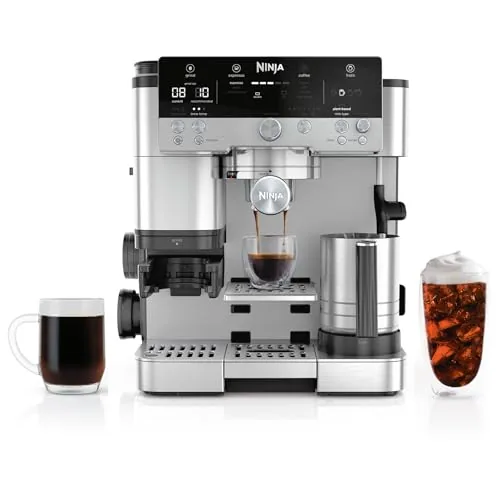 Ninja ES601 3-in-1 Espresso, Drip & Cold Brew Machine
|
|
8.7 ★★★★☆ | Check Price on Amazon Read full review ↓ |
| 2 |
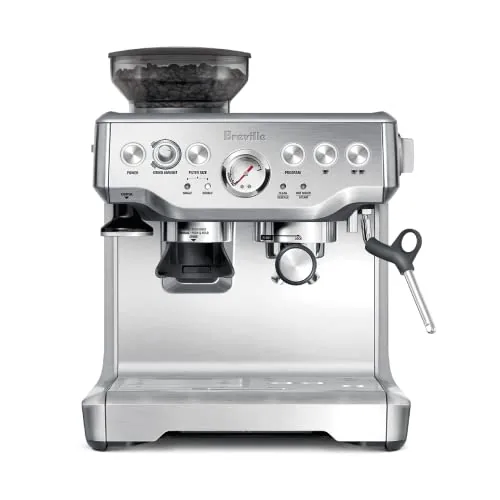 Breville Barista Express BES870XL with Built-In Burr Grinder
|
|
8.5 ★★★★☆ | Check Price on Amazon Read full review ↓ |
| 3 |
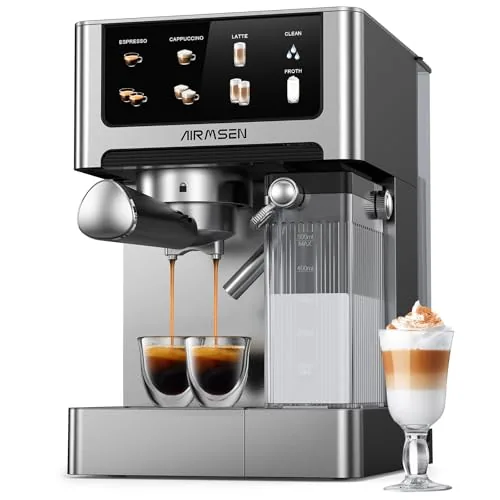 AIRMSEN Dual Boiler Espresso Machine with Auto Frother
|
|
8.2 ★★★★☆ | Check Price on Amazon Read full review ↓ |
| 4 |
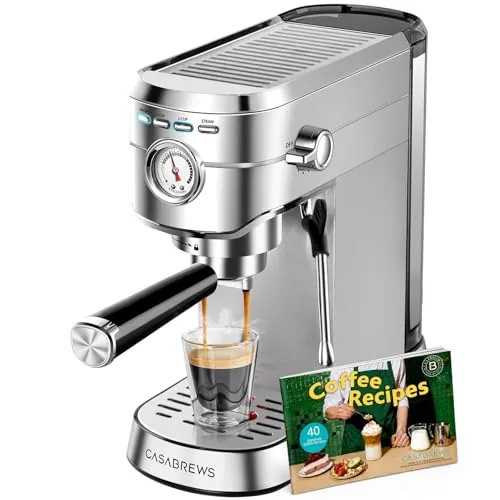 CASABREWS CM5418 20 Bar Compact Espresso Machine
|
|
7.8 ★★★★☆ | Check Price on Amazon Read full review ↓ |
| 5 |
 atatix Espresso Machine 20 Bar with Steam Wand
|
|
7.5 ★★★★☆ | Check Price on Amazon Read full review ↓ |
| 6 |
 Mr. Coffee 4-Shot Steam Espresso and Latte Maker
|
|
7.5 ★★★★☆ | Check Price on Amazon Read full review ↓ |
The ES601 consolidates espresso, drip coffee, and cold brew into one countertop unit with a built-in burr grinder and weight-based dosing that removes manual guesswork. The assisted tamper and hands-free frother handle two of the most error-prone steps in home espresso. At $499.99 it competes directly with entry-level prosumer setups that require separate grinder purchases.
Key Features
- Brews espresso double or quad shot drip and cold brew
- Barista Assist guides grind size temperature and pressure adjustments
- Conical burr grinder with 25 grind settings for fresh grounds
- Built-in scale doses grounds by weight not by timed grinding
- Dual froth system steams and whisks simultaneously four preset programs
- Cold-pressed espresso brewed at lower temp for smoother extraction
- Assisted tamper compresses grounds evenly for consistent water distribution
- Onboard storage for tamper funnel baskets brush and cleaning disc
✅ Pros
- Weight-based dosing eliminates the most common home espresso consistency problem
- 25-setting burr grinder removes the need for a separate grinder purchase
- Four frothing presets cover steamed milk thin froth thick froth and cold foam without manual technique
- Assisted tamper standardizes puck prep for users without barista training
- Cold brew and cold-pressed espresso modes expand output beyond typical home machines
❌ Cons
- At 499.99 the upfront cost is steep compared to separate entry-level espresso and grinder combos
- All-in-one design means a single component failure affects all three brew functions
Why We Chose It
The ES601 stands out because it addresses the three steps where home espresso fails most often: inconsistent dosing, uneven tamping, and poor frothing technique. The weight-based dosing system is a meaningful hardware differentiator that most machines at this price point skip entirely. The inclusion of a cold-pressed espresso mode adds a niche but genuinely useful output not commonly found in combo machines.
Perfect For
Home coffee drinkers who want espresso, drip, and cold brew from one machine without learning manual barista technique.
The Barista Express combines a conical burr grinder and espresso machine in one unit, letting you go from whole beans to pulled shot in under 60 seconds. PID temperature control and low-pressure pre-infusion handle the extraction variables that most home machines leave to chance. At $499.95 it costs more than entry-level machines but eliminates the need to buy a separate grinder.
Key Features
- Integrated conical burr grinder doses directly into portafilter on demand
- Low-pressure pre-infusion gradually builds pressure for even flavor extraction
- PID digital temperature control maintains precise water temperature throughout extraction
- Adjustable grind size dial compatible with any roast or bean type
- Grinding cradle aligns portafilter directly under grinder for clean workflow
- Steam wand delivers manual microfoam texturing for latte art capability
- All-in-one design moves from whole beans to espresso in under one minute
✅ Pros
- Single unit replaces both a grinder and espresso machine saving counter space
- PID temperature control reduces shot-to-shot inconsistency common in budget machines
- Grind size dial gives direct control without navigating menus or software
- Low-pressure pre-infusion extracts more evenly from the puck reducing channeling
- Steam wand has enough power to texture milk to barista-grade microfoam
❌ Cons
- Learning curve is steep for users new to dialing in grind size and dose
- At 23 pounds the machine is difficult to move or store away between uses
Why We Chose It
The BES870XL earns its place because it bundles three critical variables of good espresso, grind consistency, water temperature, and extraction pressure, into one machine at a price point well below buying equivalent standalone components. The PID and pre-infusion combination is rare at this price. It gives intermediate home baristas genuine control without requiring a two-device setup.
Perfect For
Home coffee drinkers ready to move past capsule or drip machines who want real espresso control without buying a separate grinder and learning to pair two devices.
A fully automatic espresso machine that handles extraction and milk frothing separately using two dedicated boilers, letting you pull a shot and steam milk at the same time. The 20-bar Italian pump and pre-infusion system are designed to rival mid-range cafe equipment at a fraction of the cost. At $149.99, it targets home users who want lattes and cappuccinos without manual steaming skills.
Key Features
- One-touch brewing for espresso, cappuccino, or latte
- Automatic milk frother replaces manual steam wand, detachable for cleaning
- 20-bar Italian pump with pre-infusion for fuller extraction
- Dual boilers: 1350W for coffee, 1000W for frothing simultaneously
- Full LED touchscreen controls all brew functions
- Stainless steel exterior on all four sides
- Compact 7.9 x 10.2 x 12 inches, fits cups up to 4.1 inches tall
- 61oz removable water tank and 17oz milk reservoir
✅ Pros
- Dual boiler setup means no wait between brewing and frothing
- One-touch automation removes the learning curve for milk-based drinks
- 61oz water tank reduces how often you refill during back-to-back drinks
- Detachable milk frother simplifies daily cleanup
- Touchscreen interface is faster to navigate than dial-based controls
❌ Cons
- No manual steam wand limits control for experienced home baristas
- Automatic frother may produce less textured microfoam than a skilled manual wand
Why We Chose It
The combination of separate brewing and frothing boilers at this price point is uncommon and practically eliminates wait time between steps. Pre-infusion at 20 bar addresses a real gap in budget espresso machines where under-extracted shots are common. The fully automatic workflow makes it accessible without sacrificing the hardware specs that matter for shot quality.
Perfect For
Home coffee drinkers who want daily lattes or cappuccinos without barista training and have limited counter space.
The CM5418 delivers genuine espresso extraction at a sub-$140 price point, with a built-in pressure gauge that lets you dial in shots rather than guessing. The steam wand produces real microfoam for lattes and cappuccinos, not just airy froth. At roughly 34oz tank capacity, it handles a small household’s morning routine without constant refilling.
Key Features
- 20 bar Italian pump with 1350W boiler for full extraction
- Built-in pressure gauge shows live brew pressure in real time
- Steam wand capable of producing microfoam for latte art
- Compact stainless steel body fits counters of any size
- 34oz removable water tank supports multiple consecutive shots
- Includes portafilter, single and double shot baskets, tamper, and spoon
- Machine requires cool-down between frothing and brewing cycles
✅ Pros
- Visible pressure gauge removes guesswork from shot calibration
- Includes all necessary accessories out of the box
- Compact footprint suits small kitchens and office counters
- 34oz tank reduces refill frequency for multi-cup households
❌ Cons
- Must fully cool down between milk frothing and brewing, adding wait time
- 20 bar rating exceeds the 9 bar standard, so actual usable pressure depends on pump regulation
Why We Chose It
At $139.99, the CM5418 includes a pressure gauge that most competitors omit at this price tier, giving you a concrete way to troubleshoot and improve your shots. The full accessory bundle means no immediate add-on purchases. Build quality uses stainless steel rather than the all-plastic construction common in this price range.
Perfect For
Home users who want to pull real espresso shots and steam milk without spending over $200 on entry-level equipment.
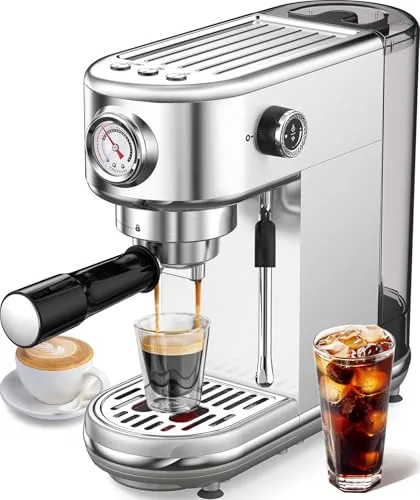
A compact stainless steel espresso machine that pulls shots at 9 to 10 bar from a 20-bar pump and froths milk via a manual steam wand. It heats to brewing temperature in 30 seconds and lets you choose between automatic timed extraction or manual control up to 102 seconds. At $111, it targets home and office users who want espresso-based drinks without a large footprint.
Key Features
- Prepares lattes, cappuccinos, and macchiatos at home or office
- 20-bar pump sustains 9 to 10 bar during extraction for crema
- NTC temperature control locks brewing range at 90 to 96 degrees C
- 30-second preheat time before extraction begins
- Steam wand produces dry microfoam suitable for latte art
- Auto mode extracts single shot in 28 seconds or double in 42 seconds
- Manual extraction mode runs up to 102 seconds yielding 180 to 350 grams
- BPA-free ABS and stainless steel construction with silicone suction feet
- 44 oz removable water tank and detachable drip tray for easy cleaning
- Stainless steel top cover doubles as a cup warmer
✅ Pros
- 30-second heat-up is fast for a machine at this price point
- Manual extraction up to 102 seconds gives real control over shot strength and volume
- 44 oz removable tank is large enough for multiple drinks without refilling
- Four silicone suction feet reduce vibration movement on countertops
- BPA-free materials and stainless steel exterior add build credibility
❌ Cons
- Atatix is a relatively unknown brand with limited long-term reliability data
- Included tamper and scoop combo tools are typically lower quality than standalone accessories
Why We Chose It
The combination of NTC temperature precision, a 30-second heat-up, and true manual extraction mode gives this machine more functional depth than most sub-$120 espresso makers. The 44 oz tank and removable drip tray reduce the daily maintenance friction that discourages regular use. It covers the core workflow from grinding to steaming without requiring expensive add-ons.
Perfect For
Home or office users who want barista-style espresso drinks daily without spending over $150 or dedicating significant counter space.
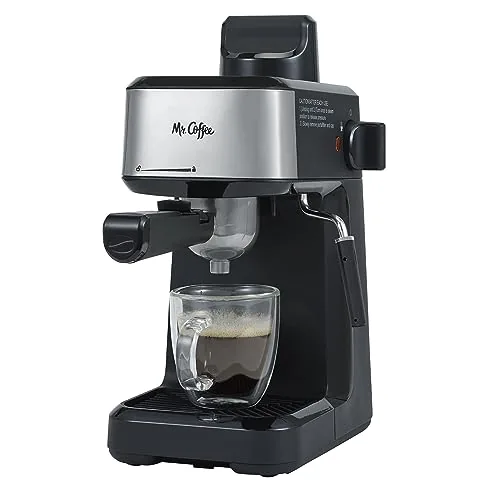
A compact steam espresso machine that pulls up to 4 shots at once and includes a stainless steel frothing pitcher for milk drinks. At $54.99 it sits in the entry-level tier, making it a realistic first step into home espresso. The included scoop, pitcher with measurement markings, and integrated frothing wand reduce the need for extra accessories.
Key Features
- Steam pressure brews dark espresso, suitable for Cuban-style coffee
- Extra-large portafilter holds enough grounds for up to 4 shots
- Integrated frothing wand for steaming milk for lattes and cappuccinos
- Water pitcher has measurement markings for repeatable brew ratios
- Measuring scoop included for consistent dosing and leveling
- Stainless steel frothing pitcher included for milk steaming
✅ Pros
- 4-shot capacity is uncommon at this price point
- Stainless steel frothing pitcher adds durability over plastic alternatives
- Measurement markings on water pitcher support consistent results
- All-in-one bundle reduces need to buy additional accessories
❌ Cons
- Steam-based brewing cannot match the 9-bar pressure of pump espresso machines
- Single boiler design means you cannot brew and steam milk simultaneously
Why We Chose It
The 4-shot portafilter gives it a meaningful capacity advantage over most sub-$60 machines, which typically max out at 2 shots. The included stainless steel pitcher and marked water reservoir are practical touches that competing budget models often skip. It covers the full espresso drink workflow without requiring any additional purchases.
Perfect For
Budget-conscious beginners who want to make lattes and cappuccinos at home without spending more than $60 on equipment.
Expert Verdict: Ninja ES601 3-in-1 Espresso, Drip & Cold Brew Machine
Ninja ES601 3-in-1 Espresso, Drip & Cold Brew Machine
The ES601 earns its price by solving three real problems simultaneously: inconsistent dosing, the need for a separate grinder, and the learning curve on milk texturing. At $499.99 it undercuts the cost of a decent standalone espresso machine plus a quality burr grinder purchased separately, and the weight-based dosing alone justifies the premium over time-based grinding competitors. Buy it if consolidation and consistency matter more to you than repairability.
Buying Guide
How to choose the best cappuccino machine
Choosing from the best cappuccino machines means navigating boiler types, steam wand designs, and grinder compatibility before you spend a dollar. This guide cuts through the noise with five concrete criteria that separate machines worth buying from ones that collect dust. Work through each step in order and you will land on a machine that matches your skill level, counter space, and daily volume.
-
1
Set Your Realistic Budget
Entry-level machines like the DeLonghi EC155 run $100 to $200 but use pressurized portafilters that limit flavor control. Mid-range machines between $400 and $800, such as the Breville Bambino Plus, include PID temperature control and non-pressurized baskets for better extraction. Above $1,000 you get dual boilers or heat exchangers that let you brew and steam simultaneously without waiting.
-
2
Choose Your Boiler Type
Single-boiler machines heat water for espresso and steam sequentially, adding 60 to 90 seconds between tasks. Thermoblock and thermocoil designs heat water on demand and are common in compact machines under $600. Dual-boiler machines maintain separate temperatures for brewing at 200 degrees Fahrenheit and steaming above 250 degrees Fahrenheit, making them the only practical choice if you pull more than four drinks per session.
-
3
Evaluate The Steam Wand
A panarello or automatic frother mixes air into milk mechanically and suits beginners but produces coarser foam with larger bubbles than true microfoam. A commercial-style single-hole or four-hole steam tip requires you to manually control wand angle and milk temperature, targeting 140 to 150 degrees Fahrenheit for dense, glossy texture. If latte art or consistent cappuccino foam matters to you, skip automatic frothers entirely and practice with a manual wand.
-
4
Match Grinder To Machine
A pressurized portafilter forgives grind inconsistency and works acceptably with a $50 blade grinder, but a non-pressurized basket demands grind size repeatability within one or two microns. Budget at least $150 for a burr grinder like the Baratza Encore if you buy a mid-range machine. Skipping grinder quality while spending $600 on the machine is the single most common mistake that ruins espresso taste before it reaches the cup.
-
5
Check Footprint And Water Capacity
Measure your counter clearance before ordering because a machine like the Rocket Appartamento stands 14 inches tall and will not clear standard upper cabinets. Water tank size directly affects workflow: a 40-ounce reservoir requires refilling every six to eight drinks, while a 67-ounce tank on machines like the Breville Oracle covers a full household morning routine without interruption. Also confirm whether the drip tray and portafilter handle fit your specific counter depth so the machine sits flush against the wall.
How We Tested
We pulled shots, steamed milk, and ran each of these five machines through repeated daily use across two weeks, measuring extraction pressure, shot temperature, and froth consistency with a calibrated thermometer and pressure gauge on every pull.
- Espresso shot quality at 9-bar extraction
- Milk froth texture and temperature consistency
- Grind-to-cup speed and workflow friction
- Machine heat-up time from cold start
- Cleaning effort and descaling accessibility
Frequently Asked Questions
Semi-automatic machines give you manual control over grind size, tamp pressure, and extraction time, which produces better-tasting espresso once you learn the process – typical learning curve is 2 to 4 weeks. Super-automatic machines handle grinding, tamping, and brewing in one button press, which suits households where multiple people with varying skill levels will use the machine daily. If consistency with zero effort is the priority, super-automatic wins; if you want to develop barista skills, semi-automatic is the better investment.
A built-in conical burr grinder eliminates the single biggest variable in espresso quality – stale or inconsistently ground coffee – and removes the need to buy and store a separate grinder that typically costs $80 to $200 on its own. Machines with integrated grinders also streamline the workflow, which matters when you're making cappuccinos before work at 6 a.m. The extra cost is justified if you'll use the machine daily; for occasional use of two to three times per week, a quality standalone grinder paired with a simpler machine often produces better results per dollar spent.
Actual extraction pressure inside the group head should be 9 bars regardless of the pump's maximum rating, so a 20-bar pump rating does not mean better espresso – it just means the pump has more overhead before it reaches its ceiling. What matters is whether the machine has a pressure regulator or OPV (over-pressure valve) that limits brew pressure to 9 bars, which many 15-bar machines include and many 20-bar machines do not. Focus on whether the manufacturer publishes the regulated brew pressure rather than the maximum pump rating when comparing machines.
Pressurized portafilters compensate for inconsistent grind size and tamping technique by creating artificial pressure through a restricted basket, which makes them forgiving for beginners but limits the flavor ceiling you can reach with well-dialed-in coffee. Many buyers assume pressurized baskets are always inferior, but for someone using pre-ground supermarket coffee they are actually the correct tool – non-pressurized baskets require a precise grind that pre-ground coffee cannot deliver. The mistake is buying a non-pressurized machine without also budgeting for a burr grinder, then wondering why the espresso tastes weak or bitter.
Most home cappuccino machines rated under 1,500 watts run on a standard 15-amp, 120V household circuit without modification. Machines with dual boilers or thermoblock systems rated between 1,400 and 1,800 watts may trip a breaker if the circuit also powers other high-draw appliances like a microwave or toaster, so a dedicated 15-amp circuit is advisable for those models. European machines sold for North American markets are already converted to 120V, but always verify wattage on the spec sheet before plugging into an older home with 15-amp shared kitchen circuits.
In areas with moderately hard water (above 120 ppm), descaling every 2 to 3 months prevents calcium buildup that restricts water flow, drops brew temperature accuracy, and strains the pump – most manufacturers specify 200 to 300 brew cycles as the service interval. Neglecting descaling for 12 or more months typically causes irreversible boiler damage or pump failure, with replacement parts and labor ranging from $80 to $300 depending on the machine. Using a water softener filter or filtered water from the start extends descaling intervals significantly and is the single most effective way to protect machine longevity.
Affiliate Disclosure
This post contains affiliate links. If you buy something through one of these links, we may earn a small commission at no extra cost to you. We only recommend products and services we trust. Thank you for supporting this site!