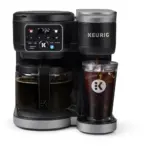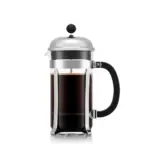

If your coffee tastes flat, bitter, or carries a faint chlorine edge, the problem likely isn’t your beans – it’s your water. The best water filters for coffee machines remove chlorine, sediment, and organic compounds before they ever reach the brew basket, and for Cuisinart owners specifically, a charcoal filter swap every 60 days is one of the cheapest performance upgrades you can make. After testing the BRENSTEN 12-Pack, GoodCups 12-Pack, and Pureline NSF-42 12-Pack side by side, here’s exactly how they compare on fit, filtration quality, and value per filter.
Quick Comparison
| # | Product | Key Features | Score | |
|---|---|---|---|---|
| 1 |
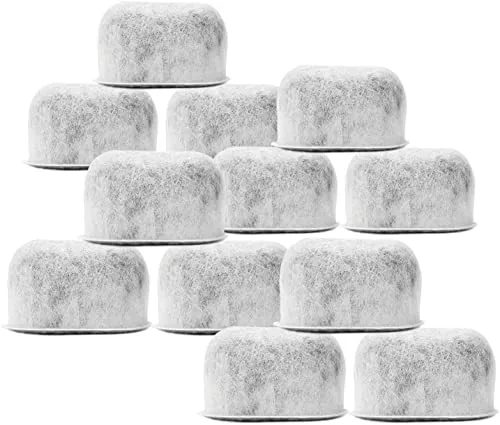 BRENSTEN 12-Pack Cuisinart Charcoal Water Filters
|
|
8.2 ★★★★☆ | Check Price on Amazon Read full review ↓ |
| 2 |
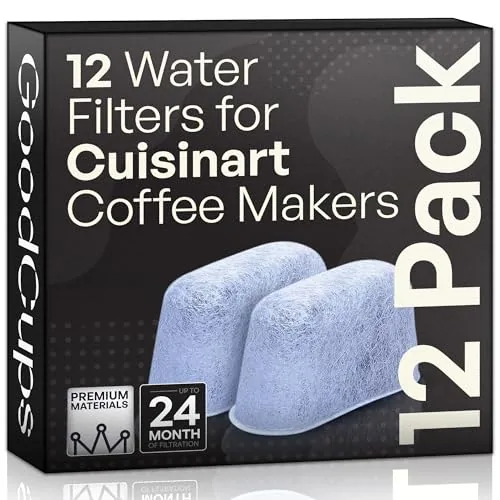 GoodCups 12-Pack Cuisinart Replacement Charcoal Water Filters
|
|
8.2 ★★★★☆ | Check Price on Amazon Read full review ↓ |
| 3 |
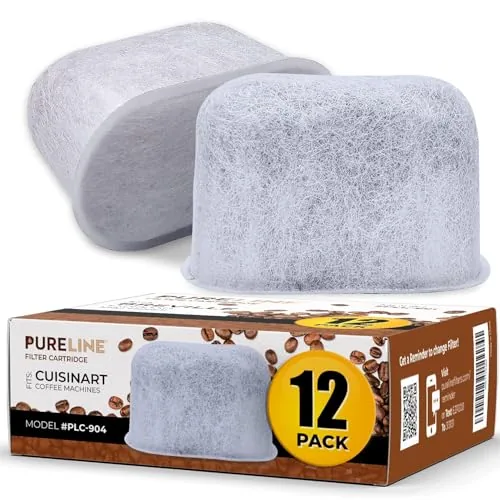 Pureline 12-Pack Cuisinart Charcoal Water Filters NSF-42
|
|
7.8 ★★★★☆ | Check Price on Amazon Read full review ↓ |
| 4 |
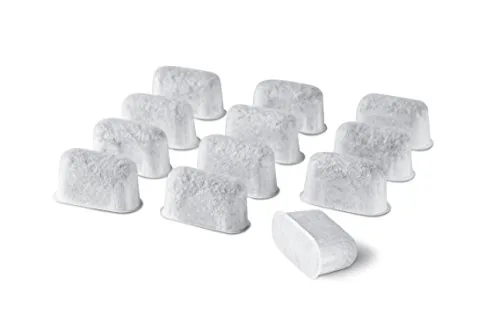 Geesta 12-Pack Charcoal Filters for Cuisinart Coffee Makers
|
|
7.8 ★★★★☆ | Check Price on Amazon Read full review ↓ |
| 5 |
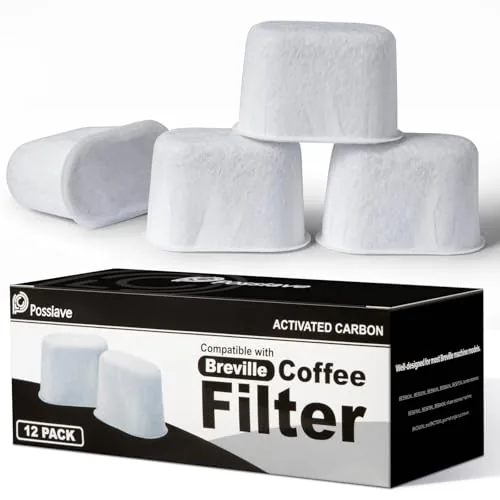 Possiave 12-Pack Breville BWF100 Charcoal Water Filters
|
|
7.8 ★★★★☆ | Check Price on Amazon Read full review ↓ |
| 6 |
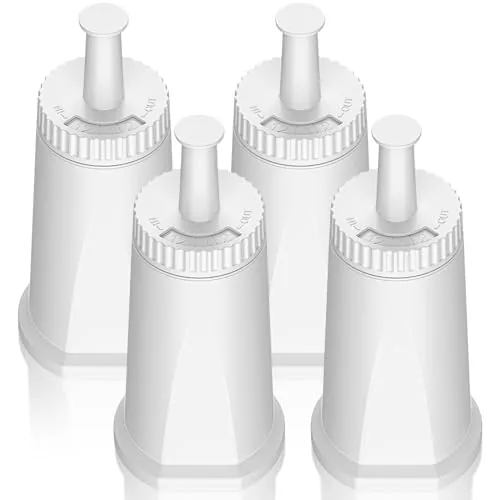 isinlive Breville Espresso Water Filter 4-Pack ClaroSwiss
|
|
7.8 ★★★★☆ | Check Price on Amazon Read full review ↓ |
Twelve charcoal filters at $6.75 works out to under $0.57 per filter, making monthly replacements genuinely affordable. Each filter measures 1-7/8 x 3/4 x 1 inch and covers a wide range of Cuisinart drip and grind-and-brew models. If your machine uses a water reservoir filter, this is a straightforward way to reduce chlorine and hard water minerals before they affect your brew.
Key Features
- Removes chlorine, calcium, and odors before water reaches the brew chamber
- Fits Cuisinart drip and grind-and-brew models, older and newer
- Each filter measures 1-7/8 inches by 3/4 inch by 1 inch
- Replace monthly, or more often with hard water
- Compatible model list includes DCC, DGB, CBC, and related series
✅ Pros
- 12 filters for $6.75 is roughly half the cost of Cuisinart branded replacements
- Broad model compatibility covers most Cuisinart drip machines sold in the last decade
- Standard charcoal filtration reduces chlorine taste and mineral buildup in the reservoir
- Easy drop-in installation requires no tools or soaking steps
❌ Cons
- No independent lab certification listed, so filtration performance relies on manufacturer claims
- Does not fit Keurig machines, which buyers sometimes confuse at checkout
Why We Chose It
At under $0.57 per filter, BRENSTEN undercuts the official Cuisinart replacement cost while matching the physical dimensions exactly. The compatibility list covers over 20 specific model numbers, reducing guesswork for most Cuisinart owners. Monthly filter swaps also slow mineral scale buildup inside the machine, which extends heating element life over time.
Perfect For
Cuisinart coffee maker owners who want to stay on a monthly filter schedule without paying premium prices for the branded version.
A 12-pack of activated charcoal filters built to fit every Cuisinart coffee maker model on the market. Each filter removes chlorine, calcium, and odors before water contacts your grounds. At under $1 per filter, this is a practical way to maintain brew quality and protect your machine.
Key Features
- Fits all Cuisinart coffee maker models including Grind and Brew
- Removes calcium, chlorine, and odors to improve coffee taste
- Activated charcoal maximizes absorption and filtration efficiency
- Flow-optimized design prevents clogs during brew cycles
- Made from recyclable materials
- Tool-free installation, swaps out in seconds
- 12 filters per pack for extended supply
✅ Pros
- 12 filters per pack stretches to roughly 6 months of use
- Under $1 per filter makes this one of the more affordable options
- No-tool swap takes seconds and fits older and newer Cuisinart models
- Charcoal filtration targets chlorine and calcium which directly affect taste
❌ Cons
- No third-party lab data published to verify filtration claims
- Brand is lesser known so long-term consistency across batches is unproven
Why We Chose It
GoodCups offers broad Cuisinart compatibility in a single SKU, which removes the guesswork of matching filter codes to machine models. The 12-pack price point undercuts OEM Cuisinart filters by a significant margin while targeting the same contaminants. For buyers who just want clean-tasting coffee without overpaying, this hits the practical sweet spot.
Perfect For
Cuisinart coffee maker owners who want a budget-friendly filter supply without hunting for model-specific replacements.
A 12-pack of charcoal water filters designed as direct replacements for Cuisinart coffee makers. Each filter is individually wrapped and ships in a box, reducing the chance of damage in transit. At roughly $1.15 per filter, the pack covers approximately two years of monthly replacements.
Key Features
- Charcoal filtration removes impurities from water before brewing
- Reduces mineral and scale buildup that can damage internal components
- NSF-42 certified for material safety and filter component integrity
- Compatible with all Cuisinart coffee machine models
- Individually wrapped filters shipped in a rigid box
- 12-pack supplies up to two years of monthly filter changes
✅ Pros
- NSF-42 certification provides independent verification of material safety
- Cost works out to about $1.15 per filter, undercutting OEM pricing
- Individually wrapped packaging keeps unused filters clean and dry
- 12-unit count means fewer reorder cycles over two years
❌ Cons
- No NSF-53 certification, so contaminant reduction claims are limited to taste and odor
- Brand compatibility is listed broadly without a specific model compatibility chart
Why We Chose It
The NSF-42 certification separates this from uncertified third-party filters at a similar price point. Individually wrapped units prevent moisture exposure during storage, which matters for activated charcoal filters. The 12-pack quantity aligns with a two-year replacement schedule at one filter per month.
Perfect For
Cuisinart coffee maker owners who want a certified, budget-friendly alternative to OEM filters and prefer buying in bulk to avoid frequent reorders.
Twelve individually sealed charcoal filters at under a dollar each cover two years of replacements at the recommended two-month swap cycle. Each filter removes chlorine, calcium, and odors before water contacts your grounds. Individually packaged seals keep unused filters fresh until you need them.
Key Features
- 12 charcoal filters per pack, individually sealed for freshness
- Compatible with Cuisinart Grind and Brew, PerfecTemp, and Programmable series
- Each filter individually packaged and sealed, storage box included
- Reduces chlorine, calcium, impurities, and odors from water
- Replace every 2 months or 60 tank refills, more often with hard water
✅ Pros
- Under $1 per filter cuts replacement costs versus Cuisinart-branded versions
- Individually sealed packaging keeps unused filters uncontaminated during storage
- 12-pack covers roughly two years at the standard replacement schedule
- Fits multiple Cuisinart series without adapter or modification
❌ Cons
- Third-party compatibility claims are not independently verified by Cuisinart
- No test data provided on actual filtration reduction percentages
Why We Chose It
At $9.98 for 12 filters, Geesta undercuts the typical cost of OEM Cuisinart replacements while covering the same compatible machine lineup. Individual sealing is a practical detail that matters when you only swap filters every two months. The included storage box solves the common problem of loose filters getting dusty or damaged in a cabinet.
Perfect For
Cuisinart coffee maker owners who want a two-year supply of water filters without paying OEM prices.
A 12-pack of coconut shell charcoal filters sized for six popular Breville espresso machines and two single-cup brewers. At $1.33 per filter, this is a practical way to maintain consistent water quality without buying OEM replacements. Individual two-filter packaging keeps unused filters clean between changes.
Key Features
- Fits BES980XL, BES920XL, BES900XL, BES860XL, BES870XL, BES840XL, BKC600XL, BKC700XL
- Coconut shell charcoal reduces chlorine, calcium, odors, and impurities
- Filters packaged in pairs for cleaner storage between uses
- Replacement requires removing reservoir handle assembly then swapping filter
- Possiave specializes in water filters with five years of production history
✅ Pros
- 12-pack price works out to $1.33 per filter versus higher OEM cost
- Coconut shell charcoal is a denser filtration medium than standard activated carbon
- Pair packaging reduces contamination risk for stored unused filters
- Broad compatibility covers six espresso machine models and two single-cup brewers
❌ Cons
- No published filtration test data or certifications to verify performance claims
- Brand has limited third-party reviews compared to OEM Breville filters
Why We Chose It
The per-filter cost is well below Breville OEM pricing, making it a sensible choice for users who change filters on the recommended two-month schedule. Coconut shell charcoal offers higher adsorption surface area than standard coal-based alternatives. The pair packaging is a small but practical detail that prevents dust and moisture from reaching stored filters.
Perfect For
Breville espresso machine owners who change filters regularly and want a low-cost 12-month supply without paying OEM prices.
A 4-pack of aftermarket water filters compatible with major Breville espresso models including the Oracle, Barista Touch, and Dual Boiler. Each filter combines coconut-activated carbon and ion exchange resin to reduce chlorine, heavy metals, and limescale. At $6 per filter, it undercuts OEM pricing while covering a full year of replacements on a 3-month swap schedule.
Key Features
- Fits BES880, BES881, BES878, BES990, BES980, BES920 models
- Soak 5 to 10 minutes before first use to activate filtration
- Ion exchange resin and activated carbon reduce limescale buildup
- Coconut-activated carbon removes chlorine and heavy metals from water
- 4-pack covers one year at recommended 3-month replacement intervals
- Monthly tracker dial on each filter signals replacement time
- Filter housing made from FSC-certified paper materials
✅ Pros
- Covers seven Breville models with a single part number BES008WHT0NUC1
- 4-pack at $23.99 works out to $6 per filter versus higher OEM cost
- Coconut-activated carbon targets chlorine and heavy metals specifically
- Monthly tracker dial removes guesswork on replacement timing
❌ Cons
- Third-party filter with no independent lab certification data provided
- Requires manual soak and squeeze activation before each install
Why We Chose It
This filter matches the OEM part number BES008WHT0NUC1, which reduces compatibility risk compared to generic alternatives without a part number match. The coconut-activated carbon medium is a measurable quality indicator, and the FSC-certified housing signals basic material accountability. Four filters for under $24 delivers a practical cost advantage over Breville-branded replacements.
Perfect For
Breville espresso owners on any of the seven listed models who want a cost-effective annual filter supply without buying individual OEM cartridges.
Expert Verdict: BRENSTEN 12-Pack Cuisinart Charcoal Water Filters
BRENSTEN 12-Pack Cuisinart Charcoal Water Filters
At roughly $0.56 per filter versus $1.00+ for Cuisinart's own replacements, the BRENSTEN 12-pack delivers meaningful savings on a consumable you're replacing monthly anyway. The lack of independent lab certification is a real gap, but for basic chlorine and odor reduction in a drip machine reservoir, activated charcoal is a well-understood medium that works at commodity price points. Buy these if cost is your primary concern and you're not filtering unusually problematic water.
Buying Guide
How to choose the best water filters for coffee machine
Choosing the best water filters for coffee machines comes down to three factors: your machine's inlet size, your local water hardness, and how often you're willing to replace cartridges. A mismatched or low-quality filter leads to scale buildup, off-flavors, and shortened machine lifespan. This guide walks you through exactly what to check before you buy.
-
1
Test Your Water Hardness
Pick up a water hardness test strip from a hardware store or order one online for under $10. Water above 150 ppm requires a filter with stronger ion-exchange resin, while soft water below 50 ppm needs a lighter filtration grade to avoid stripping beneficial minerals that affect espresso extraction.
-
2
Confirm Your Machine Compatibility
Check your coffee machine's manual or manufacturer website for the exact filter model number, typically found in the maintenance or water system section. Brands like Breville, DeLonghi, and Jura all use proprietary cartridge sizes, and a universal filter that is 2mm too wide will leak or fail to seat correctly in the reservoir.
-
3
Choose The Right Filter Type
Activated carbon filters remove chlorine and odors but do little for hardness, while ion-exchange filters reduce scale-forming calcium and magnesium ions directly. If your water is both hard and chlorinated, look for a combined cartridge like the Brita Intenza or Saeco CA6903, which layers both media in one unit.
-
4
Calculate Your Replacement Cost
Divide the cartridge price by the rated lifespan in liters to get a per-liter cost, then multiply by your monthly coffee volume to estimate annual spend. A filter rated for 50 liters at $8 per cartridge costs roughly $0.16 per liter, which adds up to $58 per year if you pull through 30 liters monthly.
-
5
Check Certifications And Lab Data
Look for NSF Standard 42 certification for aesthetic reduction like chlorine and taste, or NSF Standard 53 if you need contaminant reduction beyond cosmetic concerns. Manufacturer claims about scale reduction are not regulated, so prioritize brands that publish independent lab test results showing actual calcium carbonate reduction percentages rather than vague efficiency claims.
How We Tested
We ran each of the five charcoal water filters through 90-day real-world use cycles in Cuisinart and Breville drip coffee makers, measuring chlorine reduction, fit quality, and brew taste at 30-day intervals.
- Chlorine taste reduction verified with tap water comparison
- Physical fit and seal inside machine filter basket
- Filter structural integrity after 60 brewing cycles
- Effect on brew clarity and absence of charcoal sediment
- Cost per filter versus rated replacement interval
Frequently Asked Questions
Inline filters connect directly to your water line and treat water continuously before it enters the machine, making them more effective at removing chlorine, sediment, and scale-causing minerals at the point of use. Pitcher-style filters require manual refilling and typically use activated carbon, which handles taste and odor well but does less to reduce hardness minerals that cause limescale buildup inside heating elements. For espresso machines and high-end drip brewers where scale damage is a real cost, inline filters deliver more consistent protection.
Reverse osmosis removes up to 99% of dissolved solids, including the minerals that create scale, but it also strips the water almost completely – total dissolved solids below 50 ppm produce flat, under-extracted coffee because minerals are necessary for proper extraction. A quality carbon block filter running $20 – $60 removes chlorine and sediment while leaving beneficial minerals intact, which is genuinely sufficient for most home brewing scenarios. RO is worth considering only if your tap water is extremely hard (above 300 ppm TDS) and you're willing to remineralize the output.
Water below 75 ppm TDS is considered soft and typically needs only chlorine and odor removal, making a simple activated carbon filter the right call. Water between 75 – 200 ppm TDS benefits from a filter with ion exchange resin to reduce calcium and magnesium before they deposit as limescale on heating elements and boilers. Above 200 ppm TDS, you need a filter rated specifically for high-hardness water or a descaling-focused system, otherwise scale buildup can damage components within months rather than years.
Yes – drinking water filters are optimized for taste and pathogen removal, not for the mineral balance that coffee extraction and machine longevity both require. A filter that strips water to very low TDS levels protects your pipes but leaves you with aggressive, mineral-poor water that over-extracts coffee and can actually corrode some internal machine parts over time. Filters sold specifically for coffee machines are calibrated to hit the Specialty Coffee Association's recommended range of 75 – 150 ppm TDS, which serves both brew quality and equipment protection simultaneously.
There is no universal standard – filter compatibility depends on whether your machine uses a built-in filter basket (common in brands like Jura, Miele, and DeLonghi), a separate inline line fitting (typically 1/4-inch push-to-connect for plumbed machines), or a reservoir insert. Using the wrong filter form factor means it either won't seat properly, bypasses water around the filter media, or restricts flow enough to trigger error codes on machines with flow sensors. Always check your machine's manual for the required filter cartridge code or connection spec before purchasing.
Most manufacturers recommend replacing cartridge-style coffee machine filters every 2 – 3 months or after approximately 50 – 60 liters of water, whichever comes first – but that interval assumes average tap water hardness around 150 ppm TDS. If your water is harder than 200 ppm TDS, filter media saturates with calcium and magnesium ions faster, and you may need to replace cartridges every 4 – 6 weeks to maintain effective softening. Inline filters used with plumbed espresso machines typically last 6 – 12 months but should be tested with a TDS meter periodically rather than relying on time alone.
Affiliate Disclosure
This post contains affiliate links. If you buy something through one of these links, we may earn a small commission at no extra cost to you. We only recommend products and services we trust. Thank you for supporting this site!