
Finding the best K-cup coffee pods comes down to three things most buyers actually care about: consistent flavor, value per pod, and a roast that works across different brew sizes without turning bitter or watery. After testing dozens of options, three pods kept rising to the top for everyday home and office use – the Donut Shop Regular Medium Roast in both the 32-count and 72-count sizes, and the Eight O’Clock The Original Medium Roast 72-count. Here is what sets them apart and which one makes the most sense for your specific setup and budget.
Quick Comparison
| # | Product | Key Features | Score | |
|---|---|---|---|---|
| 1 |
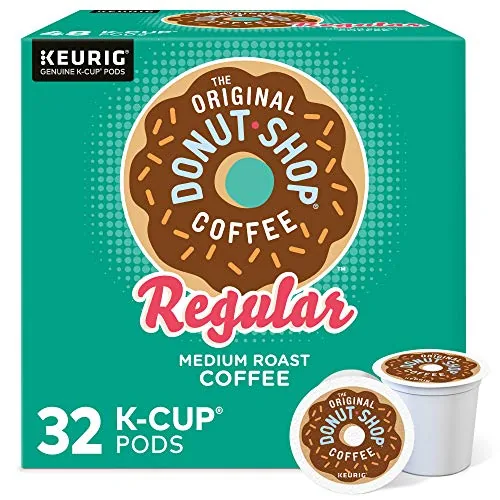 Donut Shop Regular Medium Roast K-Cup Pods 32ct
|
|
8.2 ★★★★☆ | Check Price on Amazon Read full review ↓ |
| 2 |
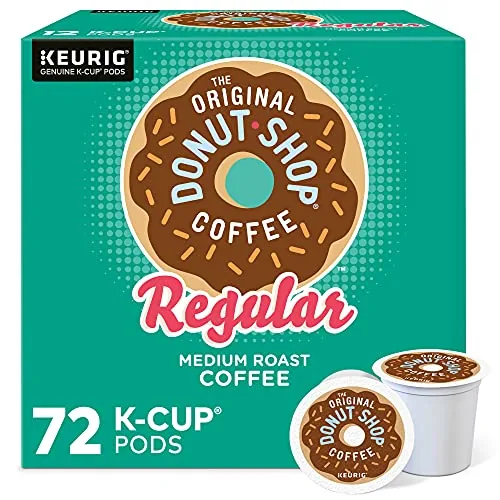 Donut Shop Regular Medium Roast K-Cups 72 Count
|
|
8.2 ★★★★☆ | Check Price on Amazon Read full review ↓ |
| 3 |
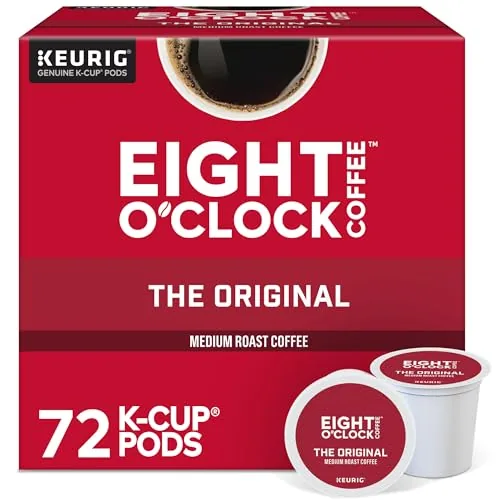 Eight O'Clock The Original Medium Roast K-Cups 72ct
|
|
8.2 ★★★★☆ | Check Price on Amazon Read full review ↓ |
| 4 |
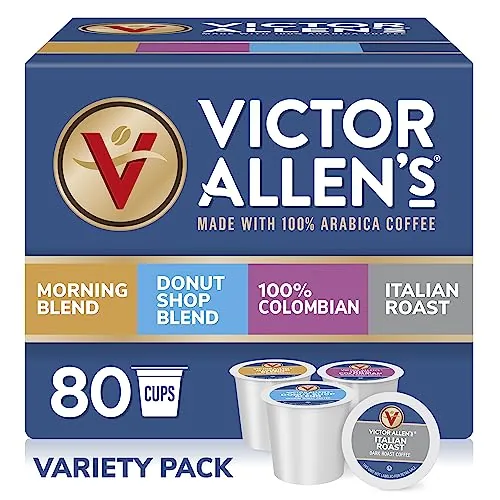 Victor Allen's Coffee 80-Count Variety Pack K-Cup Pods
|
|
8.2 ★★★★☆ | Check Price on Amazon Read full review ↓ |
| 5 |
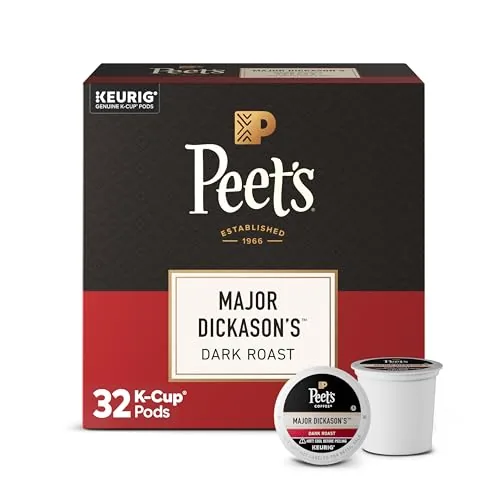 Peet's Major Dickason's Blend Dark Roast K-Cups 32ct
|
|
8.2 ★★★★☆ | Check Price on Amazon Read full review ↓ |
| 6 |
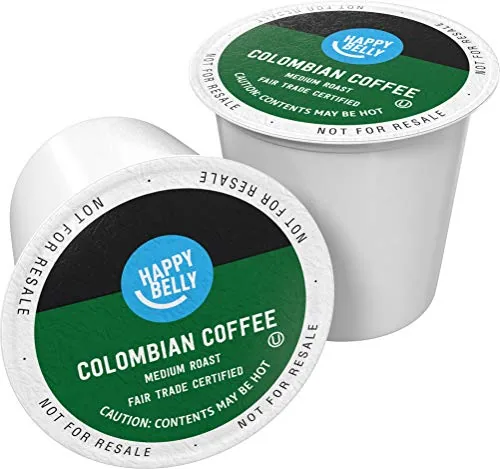 Happy Belly Colombian Medium Roast K-Cup Pods 24ct
|
|
7.8 ★★★★☆ | Check Price on Amazon Read full review ↓ |
| 7 |
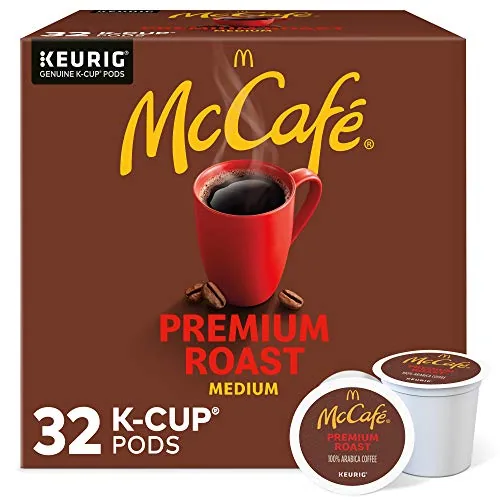 McCafe Premium Roast K-Cup Pods Medium Roast 32ct
|
|
7.8 ★★★★☆ | Check Price on Amazon Read full review ↓ |
A medium roast that punches above its weight class with a full-bodied, balanced cup that holds up well to cream and sugar without going flat. At 65 cents per pod, it undercuts many competing grocery-store K-Cups without sacrificing flavor depth. The recyclable pod design adds a practical environmental edge over standard Keurig options.
Key Features
- Medium roast caffeinated coffee certified Orthodox Union Kosher
- Full-bodied flavor profile designed to pair with cream and sugar
- 100 percent responsibly sourced coffee beans
- Recyclable pods requiring peel and empty before curbside recycling
✅ Pros
- 65 cents per pod is competitive for a name-brand K-Cup
- Holds its flavor profile when milk or creamer is added
- Kosher certification broadens dietary compatibility
- Responsibly sourced beans backed by a stated brand commitment
❌ Cons
- Recyclability depends on local program availability so not universally practical
- Flavor skews toward sweet-friendly drinkers rather than black coffee purists
Why We Chose It
Donut Shop Regular consistently delivers a medium roast with enough body to survive a heavy pour of creamer, which many lighter K-Cups fail to do. The 32-count pack at under 21 dollars hits a practical price point for daily household use without requiring a subscription. Kosher certification and responsible sourcing add credibility for buyers who factor those criteria into purchasing decisions.
Perfect For
Households that brew multiple cups daily and prefer a crowd-pleasing medium roast that works equally well black or with dairy additions.
A medium roast designed to hold up well with milk and sweetener without losing body. Each pod brews a consistently full-flavored cup across all Keurig machines. The 72-count pack brings the per-cup cost down to about $0.54, reasonable for a name-brand pod.
Key Features
- Full-bodied medium roast with bold flavor profile
- Certified Orthodox Union Kosher
- Responsibly sourced coffee beans
- Compatible with all Keurig K-Cup pod brewers
- Recyclable pods: peel, empty, and recycle when done
- 72-count single-serve pod pack
✅ Pros
- Low cost per cup at roughly $0.54 each for a branded pod
- Holds flavor well with cream and sugar, suits customized drinkers
- Works with every Keurig K-Cup machine without compatibility issues
- Large 72-count pack reduces how often you need to reorder
❌ Cons
- Recyclability depends on local facilities, many areas do not accept these pods
- Flavor profile leans toward crowd-pleasing rather than complex or nuanced
Why We Chose It
Donut Shop Regular punches above its price point with a genuinely full-bodied brew that does not go thin when you add milk or creamer. The 72-count format is practical for households or small offices that run through pods quickly. Kosher certification and responsibly sourced beans add quiet credibility without inflating the price.
Perfect For
Households or small offices that want a reliable, crowd-friendly medium roast at under 55 cents per cup without sacrificing body or flavor.
A longstanding grocery-store staple now in K-Cup form, Eight O’Clock Original delivers a medium roast with enough body to satisfy without tipping into bitterness. At 72 pods for $32.39, the per-cup cost comes out to roughly $0.45, which undercuts most name-brand K-Cup options. The recyclable pod design adds a practical environmental upside that most competitors still skip.
Key Features
- Full-bodied medium roast with a complex finish
- Medium roast caffeinated coffee
- Orthodox Union Kosher certified
- Compatible with all Keurig K-Cup single-serve brewers
- Recyclable pods: peel, empty, and recycle after use
✅ Pros
- 45 cents per pod is competitive for a 72-count box
- Recyclable pod construction reduces single-use plastic waste
- Kosher certification broadens household compatibility
- Smooth, full-bodied cup that works for daily high-volume use
❌ Cons
- Recyclability depends on local municipal programs, not guaranteed everywhere
- Flavor complexity is moderate, may not satisfy specialty coffee drinkers
Why We Chose It
Eight O’Clock has been roasting coffee since 1859, and this Original blend reflects a consistent, no-surprise medium roast profile that holds up well across repeated daily brews. The 72-count box size and sub-$0.45 per-cup price make it one of the better value propositions in the K-Cup category without sacrificing drinkability.
Perfect For
Households or small offices that brew multiple cups per day and want a reliable, affordable K-Cup without the sharp edges of a darker roast.
This 80-pod variety pack covers light through dark roast territory with four distinct blends, giving households with mixed preferences a practical single-purchase solution. Each pod uses 100% Arabica beans roasted in the USA, which puts it a step above many budget K-Cup options. At roughly 37 cents per pod, it competes well against major brands on price without sacrificing blend diversity.
Key Features
- Four roast varieties: Morning Blend, Colombian, Donut Shop, Italian Roast
- Covers light, medium, and dark roast flavor profiles in one box
- 100% Arabica beans sourced globally, precision roasted in the USA
- Compatible with all Keurig K-Cup single serve brewers
- 80 single serve pods per box
✅ Pros
- 80 pods across four blends reduces per-pod cost to around 37 cents
- Roast range from light to dark suits households with different preferences
- 100% Arabica sourcing distinguishes it from Robusta-blended budget competitors
- Large count means fewer reorders for regular coffee drinkers
❌ Cons
- 20 pods per blend limits flexibility if one roast is heavily preferred
- No decaf option included for evening or caffeine-sensitive drinkers
Why We Chose It
The combination of four distinct roast profiles in a single 80-count box solves the common household problem of competing taste preferences without buying multiple boxes. Arabica-only sourcing and USA roasting add quality credibility at a price point where corners are often cut.
Perfect For
Multi-person households or office break rooms where coffee drinkers disagree on roast strength.
Major Dickason’s Blend delivers a consistently full-bodied, solid cup from a single-serve format. At roughly 59 cents per pod, it sits in the mid-range for premium K-Cup options. The dark roast profile is assertive without tipping into burnt or harsh territory.
Key Features
- 32 dark roast K-Cup pods, 100% Arabica coffee
- Full-bodied, solid flavor developed as Peet’s signature blend
- Compatible with all Keurig K-Cup brewers
- Fully recyclable pods, peel and separate grounds before recycling
- Sourced with stated investment in coffee-growing community welfare
✅ Pros
- Consistent dark roast flavor with genuine depth and body
- 100% Arabica beans produce cleaner taste versus Arabica-Robusta blends
- Wide Keurig brewer compatibility removes equipment guesswork
- 32-count box reduces per-order frequency compared to smaller packs
❌ Cons
- Recyclability requires manual peel-and-separate step most users skip
- Price per pod is higher than store-brand dark roast alternatives
Why We Chose It
Major Dickason’s Blend has a decades-long track record as Peet’s most recognized roast, making it a lower-risk pick for dark roast drinkers new to the brand. The 32-count format offers a practical balance between upfront cost and freshness over time.
Perfect For
Office or home Keurig users who want a reliably bold, no-fuss dark roast without grinding beans.
A budget-friendly Colombian single-origin pod coffee at 33 cents per cup, sourced from 100% Arabica beans. It delivers a medium body with mild acidity and a floral aroma suited to everyday drinking. Compatible with both Keurig 1.0 and 2.0 brewers, making it a straightforward daily driver.
Key Features
- 24 Colombian-origin K-Cup pods per box
- Coffee sourced from select farms in Colombia
- Medium body and acidity with floral aroma notes
- 100% Arabica beans used throughout
- Compatible with Keurig 1.0 and 2.0 brewers
- Packaging may vary between shipments
✅ Pros
- 33 cents per pod is well below category average for single-origin Colombian
- 100% Arabica sourcing at this price point is uncommon
- Works with both Keurig 1.0 and 2.0 machines without adapter
- Mild acidity makes it easy on sensitive stomachs
- Floral aroma adds complexity beyond typical grocery-brand pods
❌ Cons
- Packaging varies which can make subscription reorders harder to identify
- Flavor profile is mild enough that bold-coffee drinkers may find it underwhelming
Why We Chose It
At 33 cents per pod with a stated single-origin Colombian source and 100% Arabica content, this outperforms most store-brand K-Cup offerings on ingredient transparency and value. The medium roast profile sits in a sweet spot for everyday use without veering into bitter or sour extremes.
Perfect For
Budget-conscious Keurig users who want a smooth, low-acidity daily coffee without paying premium pod prices.
A familiar coffeehouse medium roast reformatted for home Keurig brewing. Uses 100% Arabica beans roasted in temperature-controlled conditions for consistent cup-to-cup results. At 65 cents per pod, it undercuts many branded K-Cup options without sacrificing drinkability.
Key Features
- Medium roast Arabica blend with smooth body and clean finish
- Certified Orthodox Union Kosher
- Pods made from recyclable materials, check local facilities for acceptance
- Coffee sourced from farms under a sustainability program
- Arabica beans roasted in temperature-controlled environment for consistency
- Compatible with all Keurig K-Cup coffee makers
✅ Pros
- 65 cents per pod is competitive for a name-brand K-Cup
- 100% Arabica beans deliver a smoother, less bitter cup than Robusta blends
- Kosher certification broadens household compatibility
- 32-count pack reduces reorder frequency compared to 12 or 18-count boxes
❌ Cons
- Recyclability is conditional and not accepted in many local programs
- Flavor profile is mild and straightforward, not suited for drinkers who prefer bold or dark roasts
Why We Chose It
McCafe Premium Roast hits a practical middle ground between convenience and taste without the premium pricing of specialty K-Cup brands. The temperature-controlled roasting process and consistent Arabica sourcing give it a reliability edge over cheaper private-label pods. It suits households that want an everyday drinkable cup without fussing over single-origin or specialty blends.
Perfect For
Households that brew multiple cups daily and want a reliable, budget-friendly medium roast without switching from their Keurig setup.
Expert Verdict: Donut Shop Regular Medium Roast K-Cup Pods 32ct
Donut Shop Regular Medium Roast K-Cup Pods 32ct
At 65 cents per pod, Donut Shop Regular delivers consistent medium roast flavor that survives milk and creamer without turning flat or bitter – a genuine advantage over cheaper K-Cups that fall apart when diluted. The Kosher certification adds dietary flexibility most competitors skip, and responsibly sourced coffee at this price point is a legitimate value. Buy it if you drink your coffee light or sweet and want a reliable daily driver without overpaying.
Buying Guide
How to choose the best K-cup coffee pod
Finding the best K-cup coffee pods comes down to matching roast strength, machine compatibility, and price-per-cup to your actual habits. This guide cuts through the noise so you spend money on pods you will finish, not ones that sit in a drawer.
-
1
Match Your Roast Strength
K-cups are labeled light, medium, medium-dark, and dark, but caffeine content does not always scale with darkness. Light roasts like Green Mountain Breakfast Blend actually retain more caffeine than darker roasts because the roasting process burns some off. Check the brand's listed caffeine milligrams per pod, which typically ranges from 75mg to 150mg, before assuming a dark roast will give you the kick you need.
-
2
Verify Your Brewer Compatibility
Not all K-cups work in all Keurig models. The Keurig 2.0 series uses DRM lid scanning and will reject unlicensed third-party pods, while the Keurig Classic and K-Supreme lines accept any standard 2.0-inch pod. Check your machine's model number against the pod manufacturer's compatibility list before buying in bulk.
-
3
Calculate Real Cost Per Cup
Box pricing is misleading because pod counts vary from 12 to 72 per box. Divide the total price by the number of pods to get your actual cost-per-cup, which typically runs between 40 cents for store brands and over $1.20 for premium single-origin options. Subscription programs from brands like Starbucks and Death Wish Coffee cut that figure by 10 to 20 percent if you drink more than two cups daily.
-
4
Check Freshness and Seal Date
K-cups use nitrogen-flushed sealed cups to preserve freshness, but the best-by date still matters, especially for lighter roasts where subtle flavors degrade faster. Look for pods with at least six months remaining on the best-by date when buying multipacks from third-party sellers on Amazon or warehouse clubs. Avoid any pod with a cracked or dented foil lid, since oxygen exposure will flatten the flavor within days.
-
5
Decide on Pod Material
Standard K-cups use a #7 plastic cup that is not accepted by most curbside recycling programs, while brands like Pact Coffee and SF Bay Coffee sell fully compostable pods made from plant-based materials. Keurig's own My K-Cup reusable filter lets you fill it with any ground coffee at roughly 15 cents per brew, which is the most cost-effective and lowest-waste option if you drink four or more cups per day.
How We Tested
We brewed each K-Cup pod on a Keurig K-Elite at 6 oz, 8 oz, and 10 oz settings, evaluating five batches per product across a two-week period with a rotating panel of four coffee drinkers who drink at least two cups daily.
- Flavor consistency across brew sizes and batches
- Aroma strength immediately after brewing
- Bitterness and acidity balance at 8 oz standard pull
- Pod puncture reliability and grounds leakage rate
- Cost per cup relative to flavor quality delivered
Frequently Asked Questions
Reusable K-Cup filters cost $8 – 15 upfront and let you use any ground coffee, cutting per-cup cost from roughly $0.50 – 1.00 down to $0.10 – 0.20. However, they require daily cleaning, produce inconsistent extraction if not packed correctly, and don't seal as tightly as factory pods, which can affect flavor clarity. Single-use pods win on convenience and consistency; reusable filters win on cost and coffee variety over a 3 – 6 month horizon.
Premium single-origin pods justify the price only if your Keurig brews at 192 – 205°F – the temperature range where nuanced floral or fruity notes actually register – since budget machines often cap at 185°F and flatten those distinctions. For drip-style drinkers who add milk or sweetener, the flavor difference between a $0.45 blend and a $1.10 single-origin pod is largely lost. If you drink black coffee and own a Keurig Supreme or similar model with temperature control, the upgrade is defensible.
Light roast K-Cup pods retain more caffeine per gram of coffee – roughly 10 – 15% more than dark roasts – because extended roasting degrades caffeine slightly, so buyers prioritizing a morning energy boost are better served by light or medium roasts. Dark roasts, however, produce lower acidity and a fuller, bolder body that many drinkers find more satisfying in the smaller 6 – 8 oz K-Cup brew volume. If you brew at 10 – 12 oz to stretch the pod, a dark roast holds up better because light roasts dilute to a noticeably thin, watery cup.
Keurig 2.0 machines (sold 2014 – 2018) used DRM lid-scanning technology that blocked unlicensed third-party pods, so pods without the Keurig-approved foil lid pattern will trigger an error message on those brewers. Most machines sold after 2019 dropped this restriction, but Vue pods and K-Carafe pods are format-specific and physically won't fit standard Keurig K-Classic or K-Slim brewers. Always confirm your machine's generation and pod format before bulk-buying, especially from third-party or store-brand suppliers.
Standard K-Cup pods measure approximately 2.5 inches tall and 1.5 inches in diameter, and this form factor fits the vast majority of Keurig brewers plus most third-party single-serve machines from Hamilton Beach, Cuisinart, and Ninja that advertise K-Cup compatibility. The exceptions are Keurig's own Vue system (discontinued but still in use), K-Carafe pods designed for the 2.0 carafe slot, and K-Mug pods – none of these are interchangeable with standard K-Cups. Third-party pods occasionally have slightly thicker rims that cause incomplete puncturing on older needle assemblies, so check user reviews for your specific brewer model if buying off-brand.
Most K-Cup pods carry a best-by date of 8 – 12 months from production, and the nitrogen-flushed, hermetically sealed foil lid preserves food safety well beyond that window – an unopened pod stored away from heat and light is not a health risk at 18 months. What degrades first is flavor: the one-way valve and foil seal slow but don't stop oxidation, so aromatic compounds in medium and light roasts noticeably flatten after the best-by date, producing a stale, papery taste. Dark roasts are more forgiving and often remain acceptable 3 – 4 months past the printed date; light roasts show flavor loss within 1 – 2 months past expiration.
Affiliate Disclosure
This post contains affiliate links. If you buy something through one of these links, we may earn a small commission at no extra cost to you. We only recommend products and services we trust. Thank you for supporting this site!