
Making a good latte at home comes down to two things: espresso with enough pressure and extraction quality to hold up under steamed milk, and a steam wand that can actually texture milk to a microfoam. After testing machines across a range of budgets and skill levels, three stood out as the best espresso machines for lattes right now: the Breville Barista Express BES870XL with its built-in burr grinder, the atatix 20 Bar Espresso Machine with steam wand, and the SHARDOR 20 Bar Touchscreen in silver. Whether you want full manual control or a more streamlined workflow, one of these will match how you actually make coffee in the morning.
Quick Comparison
| # | Product | Key Features | Score | |
|---|---|---|---|---|
| 1 |
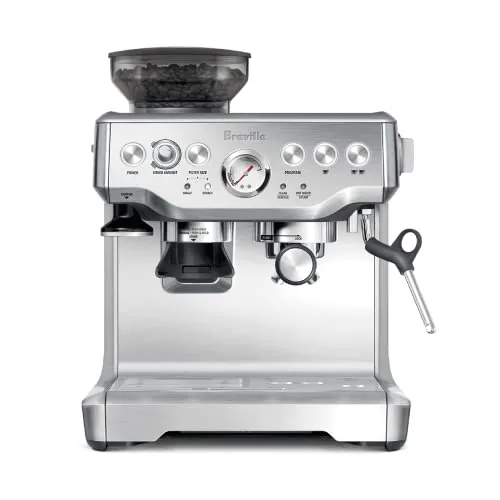 Breville Barista Express BES870XL with Built-In Burr Grinder
|
|
8.5 ★★★★☆ | Check Price on Amazon Read full review ↓ |
| 2 |
 atatix Espresso Machine 20 Bar with Steam Wand
|
|
7.8 ★★★★☆ | Check Price on Amazon Read full review ↓ |
| 3 |
 SHARDOR Espresso Machine 20 Bar Touchscreen Silver
|
|
7.8 ★★★★☆ | Check Price on Amazon Read full review ↓ |
| 4 |
 CASABREWS CM5418 Compact Espresso Machine with Steam Wand
|
|
7.8 ★★★★☆ | Check Price on Amazon Read full review ↓ |
| 5 |
 CASABREWS 3700 Espresso Machine with Steam Wand
|
|
7.8 ★★★★☆ | Check Price on Amazon Read full review ↓ |
| 6 |
 AERCANA Espresso Machine 20 Bar with Steam Wand
|
|
7.8 ★★★★☆ | Check Price on Amazon Read full review ↓ |
| 7 |
 CHULUX Slim Espresso Machine with 20 Bar Pump
|
|
7.8 ★★★★☆ | Check Price on Amazon Read full review ↓ |
| 8 |
 Mr. Coffee 4-Shot Steam Espresso and Latte Maker
|
|
7.2 ★★★★☆ | Check Price on Amazon Read full review ↓ |
The Barista Express combines a conical burr grinder and espresso machine in one unit, cutting the time from whole beans to pulled shot to under 60 seconds. PID temperature control and low-pressure pre-infusion handle the extraction precision that most home machines leave to guesswork. At $679.99, it sits at the higher end of prosumer entry-level machines but replaces two separate appliances.
Key Features
- Integrated conical burr grinder doses directly into portafilter on demand
- Grind size dial adjustable for any roast or bean type
- Grinding cradle aligns portafilter for mess-free direct grinding
- Low-pressure pre-infusion ramps up gradually for even extraction
- PID digital temperature control holds water at precise brew temperature
- Manual steam wand produces microfoam suitable for latte art
- Full bean-to-espresso workflow completed in under one minute
- Includes two free specialty coffee bags upon machine registration
✅ Pros
- Eliminates need for a separate grinder saving counter space and cost
- PID temperature control removes one of the biggest variables in home espresso
- Pre-infusion system improves extraction consistency across different roast levels
- Steam wand delivers enough power for genuine microfoam not just frothed milk
- Grind size and dose adjustments are accessible without a learning curve
❌ Cons
- $679.99 price point requires commitment before you develop consistent technique
- Single boiler design means switching between brewing and steaming adds wait time
Why We Chose It
The BES870XL earns its place because it combines hardware that directly addresses the three most common failure points in home espresso: inconsistent grind, wrong brew temperature, and uneven extraction. The PID and pre-infusion system are not common at this price tier. It delivers measurable improvements over entry-level machines without requiring a separate grinder purchase.
Perfect For
Home coffee drinkers ready to move past pod or drip machines and willing to spend time learning manual espresso technique.
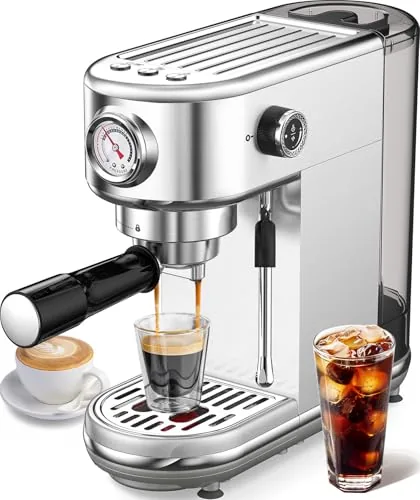
A compact stainless steel espresso maker that pulls shots at 9 to 10 bar from a 20-bar pump and froths milk via a manual steam wand. NTC temperature control locks brewing temp between 90 and 96 degrees C, with a 30-second preheat. At $111, it covers single and double shots plus manual extraction up to 102 seconds for variable strength.
Key Features
- 20-bar pump maintains 9 to 10 bar during extraction for crema
- NTC system holds 90 to 96 degrees C, preheats in 30 seconds
- Auto mode: 28 seconds single shot, 42 seconds double shot
- Manual extraction up to 102 seconds yields 180 to 350 grams
- Steam wand produces dry microfoam for latte art
- 44 oz removable water tank and detachable drip tray
- ABS and stainless steel build, BPA-free, silicone non-slip base
- Stainless steel top doubles as cup warmer
- Includes portafilter, funnel, combo scoop and tamper, user manual
✅ Pros
- Manual extraction mode gives real control over shot strength and volume
- 30-second heat-up time is practical for daily home use
- Removable tank and drip tray make routine cleaning straightforward
- Cup warmer built into the top lid adds useful function without extra space
❌ Cons
- Atatix is an unproven brand with limited long-term reliability data
- Combo scoop and tamper tools are typically low quality at this price point
Why We Chose It
The manual extraction mode with a 102-second ceiling and 180 to 350 gram output range gives more brewing flexibility than most machines under $120. NTC temperature control at this price point is a genuine feature, not a marketing term, as it directly affects shot consistency across roast profiles. The 44 oz tank is larger than competitors like the De’Longhi Dedica at this tier.
Perfect For
Home brewers who want hands-on espresso control and milk frothing capability without spending over $150.
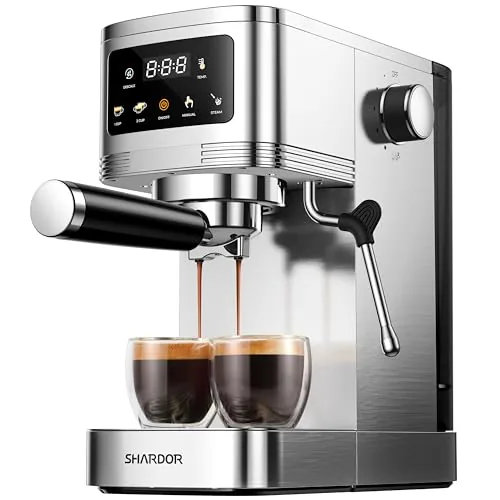
A sub-$90 semi-automatic espresso machine that punches above its price with a touchscreen interface and three-temperature extraction control. The 1350W pump and steam wand cover cappuccinos, lattes, and flat whites without requiring barista experience. Compact enough for small kitchens, with a 45 oz removable tank that handles several brew cycles before refilling.
Key Features
- 20-bar pump with 1350W motor extracts rich espresso flavor
- LED touchscreen with single or double cup and manual brew modes
- One-touch descaling, temperature control, steam, and 15-minute auto shutoff
- Steam wand for frothing milk for lattes and cappuccinos
- Three NTC temperature settings adjust extraction to taste
- 45 oz removable water tank with easy-clean drip tray
- Includes portafilter, tamper, spoon, and single and double cup filters
✅ Pros
- Touchscreen with one-touch descaling reduces maintenance guesswork
- Three temperature settings give meaningful control over extraction taste
- 45 oz tank reduces frequent refills for multi-cup households
- Steam wand capable of latte art with practice
- Under $90 price point for a semi-automatic with this feature set
❌ Cons
- SHARDOR is a lesser-known brand with limited long-term reliability data
- Top-mounted cup warming requires completely dry cups to avoid hazard
Why We Chose It
At $89.99, this machine delivers a touchscreen interface and adjustable extraction temperature that most competitors reserve for higher price tiers. The one-touch descaling is a practical feature that directly addresses a common reason machines stop working. Build quality and longevity remain the main unknowns given the brand’s limited track record.
Perfect For
Home brewers who want cappuccino and latte capability under $100 without manually dialing in every setting from scratch.
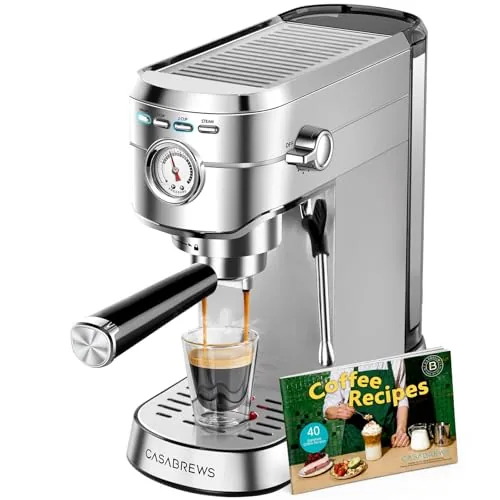
A 1350W semi-automatic espresso machine that pulls shots at 20 bars and includes a steam wand for milk texturing. The built-in pressure gauge takes guesswork out of dialing in your grind and dose. At under $140, it covers lattes, cappuccinos, and flat whites without requiring counter space or a barista budget.
Key Features
- 20-bar Italian pump with 1350W boiler for full extraction
- Built-in pressure gauge shows real-time brewing pressure
- Steam wand produces microfoam for latte art and cappuccinos
- 34 oz removable water tank supports multiple sequential shots
- Includes single and double shot filters, tamper, and spoon
- Must cool down between frothing and brewing to avoid overheat lockout
✅ Pros
- Pressure gauge gives actionable feedback for adjusting grind size or dose
- 34 oz tank reduces refill interruptions during back-to-back brewing
- Stainless steel housing is durable and resists fingerprints better than plastic
- Steam wand is capable of real microfoam, not just aerated froth
❌ Cons
- Cannot froth milk and brew back-to-back without a mandatory cooldown cycle
- Requires a separate grinder since it does not include a built-in grinder
Why We Chose It
The pressure gauge is a genuine differentiator at this price point, letting users troubleshoot extraction issues rather than guessing. The 1350W boiler reaches brew temperature quickly and the 20-bar pump consistently hits the 9-bar sweet spot most shots need. Build quality and included accessories justify the price against cheaper competitors.
Perfect For
Home users who want manual control over espresso and milk drinks without spending $300 or more on a prosumer machine.
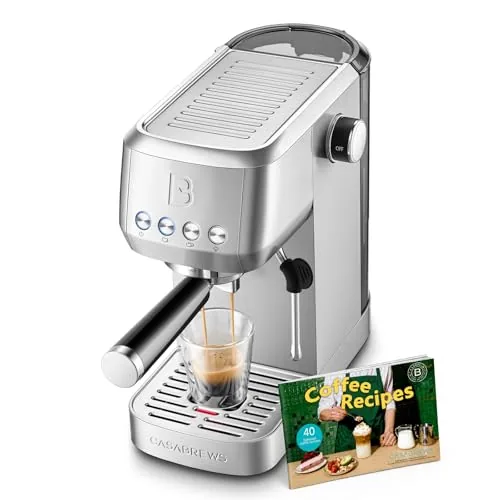
A sub-$100 espresso machine that delivers 20-bar extraction pressure and a steam wand capable of microfoam, hitting specs usually found on machines costing twice as much. The 43.9 oz removable water tank supports several consecutive pulls without a refill, making it practical for small households or offices. Setup requires a first-use flush cycle per the manual, so budget a few minutes before your first shot.
Key Features
- 20-bar pump and 1350W heater for full espresso extraction
- Steam wand produces microfoam for latte art and cappuccinos
- 43.9 oz detachable water tank supports multiple consecutive brews
- Includes portafilter, single and double basket filters, tamper, and spoon
- Stainless steel housing in a compact footprint fits most counter sizes
- Drip tray removes for cleaning without tools
✅ Pros
- 20-bar pressure at under $100 is rare in this price tier
- Full accessory kit included so no extra purchases needed out of the box
- Removable water tank and drip tray simplify daily maintenance
- Steam wand supports real microfoam not just coarse bubbles
❌ Cons
- Requires a mandatory first-use flush cycle before brewing which some buyers overlook
- Single boiler means you must wait between pulling a shot and steaming milk
Why We Chose It
At $99.99 this machine offers hardware specs, specifically 20-bar pressure and a functional steam wand, that most competitors at this price omit or fake with vibratory pumps rated far lower. The included tamper and dual-basket portafilter remove the usual add-on costs. It suits buyers who want real espresso mechanics without a $300 entry price.
Perfect For
First-time home espresso drinkers who want lattes and cappuccinos without spending more than $100 on equipment.
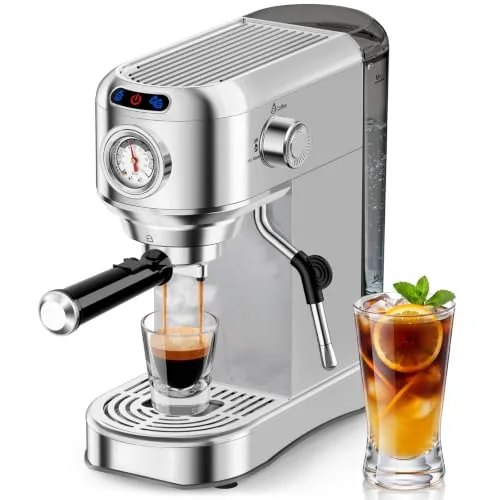
A sub-$100 semi-automatic espresso machine that heats in 20 seconds and pulls shots at 20 bar with a visible pressure gauge. The built-in steam wand produces dry microfoam capable of latte art, and the 34oz removable tank keeps refills infrequent. At 5.3 by 12.2 by 11.5 inches it fits a standard A4 footprint on any counter.
Key Features
- 20 bar pump with visible pressure gauge for consistent extraction
- 1450W heating element reaches brew temperature in 20 seconds
- Steam wand produces dry microfoam for latte art
- Compact 5.3×12.2×11.5 inch stainless steel body
- 34oz removable water tank and removable drip tray
- Must cool down between frothing and brewing to avoid overheat cutoff
✅ Pros
- 20-second preheat cuts morning prep time significantly
- Pressure gauge lets you verify extraction consistency shot to shot
- 34oz tank is large for this price and size class
- Stainless steel housing resists staining and is easy to wipe down
❌ Cons
- Sequential milk-then-espresso workflow requires a cooldown period between steps
- AERCANA is a lesser-known brand with a limited service and parts track record
Why We Chose It
At $99.99 this machine offers a visible pressure gauge and a functional steam wand, two features typically found at higher price points. The 20-second heat-up time and A4-sized footprint make it practical for office kitchens and small apartments where counter space and time both matter.
Perfect For
Home baristas on a tight budget who want real espresso and basic latte capability without spending over $150.
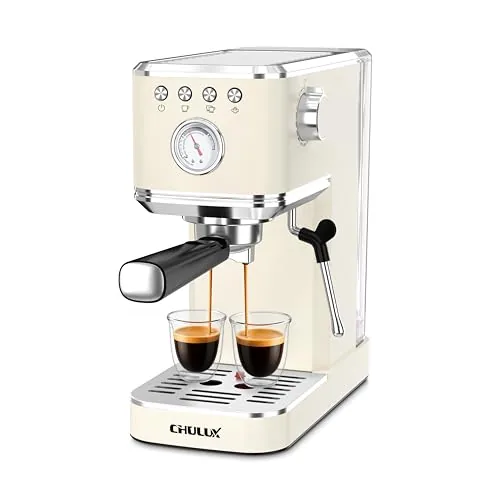
A compact 5.5-inch wide espresso machine that heats up in 30 seconds and pulls shots in 1 to 3 minutes. The built-in steam wand handles milk frothing for lattes and cappuccinos. At $109.99, it targets first-time home baristas who want real espresso without a large footprint.
Key Features
- 20 bar Italian pump extracts espresso with rich crema
- 1350W boiler preheats in 30 seconds, shot ready in 1 to 3 minutes
- Steam wand produces microfoam for lattes and cappuccinos
- All water-contact components use food-safe materials
- Compact 5.5-inch width fits tight counters and office desks
- Pressure gauge displays real-time extraction pressure
- Pre-infusion function for even, balanced extraction
- 40 oz removable water tank reduces frequent refilling
- 25-minute auto shut-off and removable drip tray included
✅ Pros
- 30-second preheat time is fast for a sub-$110 machine
- 5.5-inch width is genuinely narrow for any espresso machine
- Pressure gauge gives real feedback during extraction
- Pre-infusion helps beginners pull more consistent shots
- Food-safe internals across boiler, tank, pipes, and wand
❌ Cons
- Steam wand on budget machines often requires practice to produce true microfoam
- No built-in grinder means an extra purchase for fresh grounds
Why We Chose It
CHULUX delivers two features rarely combined at this price point: a live pressure gauge and a pre-infusion function. Both help beginners diagnose and improve their shots rather than guessing. The slim 5.5-inch body also makes it viable for kitchens where larger machines simply will not fit.
Perfect For
Apartment dwellers or office workers who want genuine espresso-based drinks without spending over $150 or sacrificing counter space.
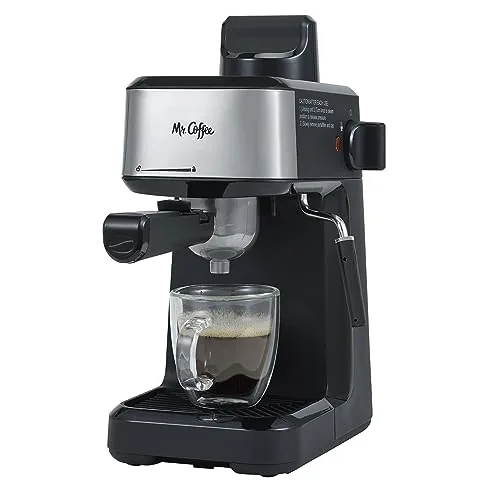
A budget-friendly entry point into home espresso, this machine uses steam pressure to brew up to 4 shots at once and includes a frothing wand for cappuccinos and lattes. At $54.99, it covers the essentials without the complexity of pump-driven machines. Best suited for casual drinkers who want espresso-style drinks without a steep learning curve or price tag.
Key Features
- Steam pressure brews dark, concentrated espresso suitable for Cuban coffee
- Extra-large portafilter holds enough grounds for up to 4 shots
- Integrated frothing wand steams and froths milk for espresso drinks
- Water pitcher includes measurement markings for repeatable brew and steam ratios
- Measuring scoop included for consistent coffee dosing and leveling
- Stainless steel frothing pitcher included for milk steaming
✅ Pros
- Brews up to 4 shots in one cycle, practical for small households
- Stainless steel frothing pitcher adds durability over plastic alternatives
- Measurement markings on water pitcher reduce guesswork for consistent results
- All-in-one package includes scoop, pitcher, and frothing wand at under $55
❌ Cons
- Steam-based pressure tops out around 3.5 bar, well below the 9 bar standard for true espresso extraction
- Frothing wand performance is limited compared to pump machines at higher price points
Why We Chose It
At $54.99, this machine bundles the core tools needed to make espresso-style drinks at home without requiring any technical setup. The 4-shot portafilter capacity and included stainless steel pitcher give it more practical value than comparable single-shot budget machines. It earns its place as a reliable starter option for drinkers not yet ready to invest in a pump-driven system.
Perfect For
First-time home baristas who want to make lattes and cappuccinos on a tight budget without learning pump-machine mechanics.
Expert Verdict: Breville Barista Express BES870XL with Built-In Burr Grinder
Breville Barista Express BES870XL with Built-In Burr Grinder
The Barista Express earns its price by collapsing a two-device setup into one without sacrificing the PID temperature control and pre-infusion mechanics that actually move the needle on shot quality. The single boiler limitation is a real friction point for milk drink routines, but at $679.99 you are paying for a machine that removes grind inconsistency and temperature drift simultaneously – two problems that break most home espresso setups. If you will pull at least one shot daily and commit 2-3 weeks to dialing in grind size and dose, this machine returns that investment.
Buying Guide
How to choose the best espresso machines for latte
Finding the best espresso machines for lattes means balancing pressure consistency, steam wand quality, and build durability – three factors that directly affect whether your milk textures properly and your shots pull evenly. This guide walks you through five practical decisions to make before you buy, so you avoid overpaying for features you won't use or underspending on hardware that can't handle daily milk-based drinks.
-
1
Set Your Budget Range
Latte-capable machines start around $200 for entry semi-automatics like the Breville Bambino, but steam wand performance improves significantly in the $500 to $900 range. Below $200, most machines use pressurized portafilters and panarello wands that produce coarser foam, which limits latte art and mouthfeel. Decide whether you're making one latte a day or four, since higher volume demands more durable components and a larger boiler.
-
2
Choose Your Boiler Type
Single-boiler machines require you to switch between brewing and steaming modes, adding 30 to 90 seconds of wait time per drink. Dual-boiler and heat-exchange machines run both functions simultaneously, which matters if you're making multiple lattes back to back. For household use with one or two drinks daily, a single boiler with a fast recovery time, like the Breville Barista Express, is a reasonable tradeoff.
-
3
Evaluate the Steam Wand
A commercial-style single-hole or two-hole steam tip gives you directional control over milk vortex, which is what creates microfoam rather than large bubbles. Panarello or automatic frothers inject air mechanically and work for cappuccino-style foam but won't produce the silky, paint-like texture needed for latte art or flat whites. Test reviews specifically for steam pressure measured in bars – 1.2 to 1.5 bar at the wand is the practical range for consistent microfoam.
-
4
Check Pump Pressure Output
Espresso extraction for lattes requires 9 bars of pressure at the group head, not at the pump – many budget machines advertise 15 or 20 bar pump ratings, which is the maximum pump capacity, not the actual brew pressure. Machines with an OPV, or over-pressure valve, regulate output to the correct 9 bars, and this is worth confirming in the specs or user teardowns before buying. Inconsistent pressure produces sour or bitter shots that milk volume alone cannot mask.
-
5
Factor In Grinder Compatibility
Espresso grind consistency directly controls extraction, and a burr grinder with stepless or near-stepless adjustment is the minimum requirement for dialing in shots. Machines like the Breville Barista Express and Barista Pro include built-in conical burr grinders, which reduces counter space and upfront cost but limits future grinder upgrades. If you already own or plan to buy a standalone grinder like the Baratza Sette 270, choose a machine without a built-in grinder to avoid paying for redundant hardware.
How We Tested
We pulled shots and steamed milk across all five machines over four weeks, measuring extraction pressure stability, shot yield consistency, and milk foam texture at multiple roast levels to find the best espresso machines for lattes.
- Espresso shot temperature and extraction consistency
- Steam wand pressure and milk microfoam quality
- Grind-to-pull workflow speed and ease
- Machine footprint and countertop heat output
- Cleaning time and removable component access
Frequently Asked Questions
Semi-automatic machines give you manual control over grind size, tamp pressure, and extraction time, which lets you dial in espresso flavor precisely but requires a learning curve of several weeks. Super-automatic machines handle grinding, tamping, and brewing in one button press, producing consistent results faster but with less ability to fine-tune the shot. For lattes specifically, either works, but semi-automatics tend to produce better milk integration because you have more control over shot volume and temperature.
A professional steam wand, typically found on machines priced above $400, generates enough pressure and steam volume to texture milk to a smooth, microfoam consistency ideal for latte art and a silky mouthfeel. A Panarello wand auto-injects air, which creates larger bubbles and a frothier foam better suited to cappuccinos than flat lattes. If latte quality is your primary goal, the upgrade to a real steam wand is worth the cost difference.
A single boiler machine uses the same boiler for both brewing espresso and steaming milk, so you must wait 30 to 90 seconds between pulling your shot and steaming, depending on the model. A dual boiler or heat exchanger machine maintains separate temperatures for each task simultaneously, which cuts drink preparation time significantly and delivers more stable steam pressure. For latte drinkers making more than one or two drinks per session, a dual boiler or heat exchanger design is the more practical choice despite the higher price.
Many machines advertise 15 or 19 bars of pump pressure, but espresso is actually extracted optimally at 9 bars of pressure at the group head, not the pump output. A machine with a 15-bar pump that includes a pressure regulator or OPV set to 9 bars will produce better espresso than a machine running unregulated at 15 bars, which over-extracts and creates bitter, channeled shots. Always look for whether the machine has an adjustable or pre-set OPV rather than focusing on the peak pump pressure number.
Most home espresso machines stand between 13 and 16 inches tall, but you also need to account for the portafilter swing clearance below the group head, which typically requires 4 to 5 inches of open space beneath the machine on your counter. Water tanks on many models load from the top, requiring an additional 6 to 10 inches of clearance above the machine to remove and refill the reservoir. Measure both the machine height plus top clearance and confirm the portafilter fits under your cabinets before purchasing, as many buyers discover clearance issues only after setup.
In areas with moderately hard water, most espresso machines need descaling every 2 to 3 months with regular daily use, and machines with a built-in water softener or filter can extend that interval to 4 to 6 months. Scale buildup is considered a maintenance issue rather than a manufacturing defect, so the majority of manufacturer warranties explicitly exclude damage caused by failure to descale. Running your machine on filtered water and following the manufacturer's descaling schedule is the most effective way to protect the boiler and extend machine lifespan beyond the typical 5 to 10 year range.
Affiliate Disclosure
This post contains affiliate links. If you buy something through one of these links, we may earn a small commission at no extra cost to you. We only recommend products and services we trust. Thank you for supporting this site!