
Hard water is the leading cause of scale buildup inside espresso machines, clogging boilers and group heads, shortening equipment life, and degrading shot quality over time. A dedicated water softener sits between your water supply and your machine, removing calcium and magnesium ions before they cause damage. After testing multiple options, three products consistently stood out: the MacMaxe In-Tank Espresso Machine Water Softener, the AosBet Espresso Machine Water Softener Filter, and the MacMaxe DVA 8L Rechargeable Stainless Steel Water Softener.
Quick Comparison
| # | Product | Key Features | Score | |
|---|---|---|---|---|
| 1 |
 MacMaxe In-Tank Espresso Machine Water Softener
|
|
8.2 ★★★★☆ | Check Price on Amazon Read full review ↓ |
| 2 |
 AosBet Espresso Machine Water Softener Filter
|
|
7.8 ★★★★☆ | Check Price on Amazon Read full review ↓ |
| 3 |
 MacMaxe DVA 8L Rechargeable Stainless Steel Water Softener
|
|
7.8 ★★★★☆ | Check Price on Amazon Read full review ↓ |
| 4 |
 Baolide DVA LT8 Compact Countertop Espresso Water Softener
|
|
7.8 ★★★★☆ | Check Price on Amazon Read full review ↓ |
| 5 |
 verybarista Limescale Protection Pad for Espresso Machines
|
|
7.8 ★★★★☆ | Check Price on Amazon Read full review ↓ |
| 6 |
 Naucoos 70L Cationic Resin Filter for LELIT PLA930M
|
|
7.8 ★★★★☆ | Check Price on Amazon Read full review ↓ |
| 7 |
 Naucoos 70L Cationic Resin Filter for LELIT Espresso
|
|
7.8 ★★★★☆ | Check Price on Amazon Read full review ↓ |
| 8 |
 Qualirey 2-Pack Cationic Resin Filter for LELIT Machines
|
|
7.8 ★★★★☆ | Check Price on Amazon Read full review ↓ |
| 9 |
 BWT Bestsave M Limescale Pad for Coffee Machines
|
|
7.5 ★★★★☆ | Check Price on Amazon Read full review ↓ |
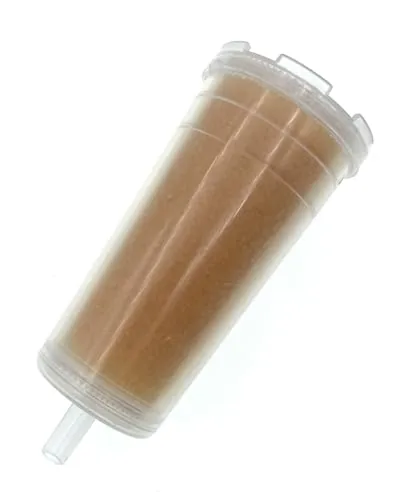
A compact water softener designed to drop directly into espresso machine reservoirs, reducing limescale buildup before it damages heating elements and group heads. At under $12, it costs far less than descaling treatments or a service call. Works across a wide range of tank-fed home machines from brands like Rancilio, Lelit, and Quickmill.
Key Features
- Installs directly into machine water tank in seconds
- Protects internal components from mineral scale damage
- Effective for approximately 3 months under regular use
- Compatible with most tank-fed home espresso machines
- Reduces existing scale and inhibits new scale formation
✅ Pros
- Under $12 per unit makes it a low-risk preventive measure
- No tools or plumbing knowledge required for installation
- Broad compatibility covers most popular prosumer tank-fed machines
- Replaces every 3 months giving a clear maintenance schedule
❌ Cons
- Lifespan varies with water hardness so high-mineral-content water may shorten effective period
- No visual indicator to confirm when softening capacity is exhausted
Why We Chose It
At this price point it is one of the cheapest forms of machine protection available, costing less than a single descaling tablet pack. The drop-in design removes any installation friction, making it realistic that users will actually keep up with the maintenance routine.
Perfect For
Home espresso enthusiasts running tank-fed machines in moderately hard water areas who want a passive, low-cost way to extend the life of their equipment between descaling cycles.
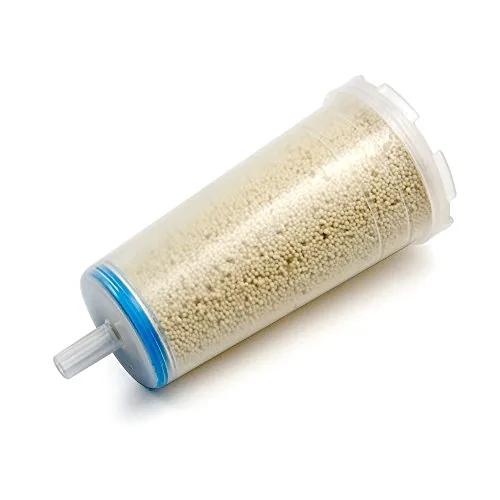
A low-cost inline water filter designed to reduce limescale buildup in tank-fed home espresso machines. At $13.18 per unit with a roughly 3-month lifespan, it costs under $5 per month to protect boilers and group heads worth hundreds of dollars. It fits a wide range of Italian and European machines without tools or plumbing changes.
Key Features
- Installs in seconds with no tools required
- Protects boiler and internal components from scale damage
- Rated for approximately 3 months of regular daily use
- Compatible with most tank-fed home espresso machines
- Reduces existing scale and inhibits new scale formation
✅ Pros
- Low cost per month relative to potential repair bills
- Broad compatibility covers most tank-fed machines without adapters
- Dual-action formula addresses both active scale and prevention
- Simple swap-in replacement requires no technical knowledge
❌ Cons
- No included indicator to signal when the filter is exhausted
- 3-month lifespan requires consistent replacement tracking to stay effective
Why We Chose It
At roughly $4.40 per month, this filter offers a practical cost-to-protection ratio for machines that are expensive to descale or repair. Its broad tank-fed compatibility means most buyers can order without measuring fittings or checking manuals. The dual scale reduction and protection mechanism goes beyond basic filtration.
Perfect For
Home espresso enthusiasts using Italian or European machines in hard-water areas who want a low-maintenance way to extend machine life.
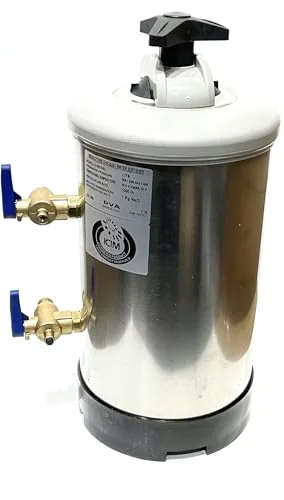
A rechargeable ion-exchange water softener built for direct plumbing connections on espresso machines, ice makers, and similar equipment. The 8-liter stainless steel cylinder handles meaningful volume before needing regeneration. At $179.98, it targets home baristas and small cafe operators who want scale prevention without disposable cartridge costs.
Key Features
- Connects directly to main water supply for espresso and ice machines
- Reduces calcium and magnesium to limit scale buildup in pipes and heaters
- Improves beverage flavor by removing minerals that affect taste and aroma
- Stainless steel cylinder holds 8 liters of ion-exchange resin
✅ Pros
- Rechargeable design eliminates recurring cartridge replacement costs
- 8-liter resin capacity suits high-volume home or light commercial use
- Stainless steel housing resists corrosion better than plastic alternatives
- Targets both scale prevention and flavor improvement in one unit
❌ Cons
- Regeneration process requires salt and downtime which interrupts water supply
- No mention of a hardness indicator or monitoring system included
Why We Chose It
The rechargeable format makes this a more economical long-term choice than single-use filters once the upfront cost is offset by avoided cartridge purchases. Stainless steel construction at this price point is not common and adds durability for a device that handles constant water pressure. The direct plumbing connection suits setups where inline protection matters most.
Perfect For
Home baristas or small cafe operators in hard water areas who want a permanent inline softening solution for their espresso machine.
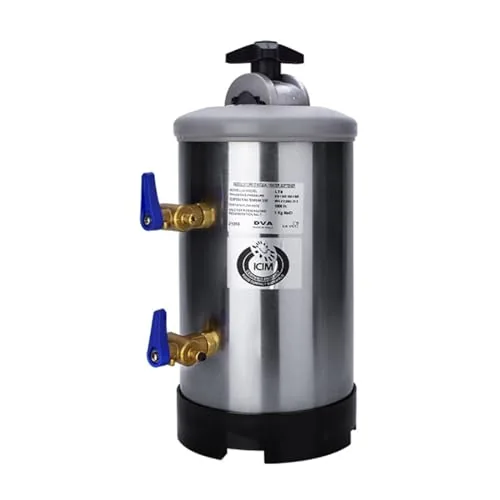
The Baolide DVA LT8 uses ion-exchange resin to strip calcium and magnesium from tap water before it enters your espresso machine. This directly reduces limescale buildup inside boilers and group heads, cutting descaling frequency. At $255.98 it targets home baristas and small cafe operators who want to protect equipment without installing a whole-house system.
Key Features
- Ion-exchange resin removes calcium and magnesium to soften water
- Reduces limescale formation inside boilers and internal components
- Produces cleaner water that preserves coffee color and clarity
- Pairs with a separate water filter for balanced mineral control
✅ Pros
- Compact countertop footprint fits under most espresso machine setups
- Resin-based softening works without electricity or salt pellets
- Directly reduces descaling intervals on vulnerable espresso components
- Compatible with an inline water filter for dual-stage treatment
❌ Cons
- Resin cartridge requires periodic regeneration or replacement adding ongoing cost
- No included TDS meter or hardness test strips to confirm effectiveness
Why We Chose It
The LT8 addresses a specific and expensive problem: limescale damage to espresso machine boilers and heat exchangers. Unlike pitcher-style filters, it sits inline and treats every shot pulled. The resin medium is a proven softening technology used in commercial cafe setups at a fraction of the price.
Perfect For
Home espresso enthusiasts or small cafe owners in hard-water areas who want to extend machine lifespan and reduce descaling downtime.
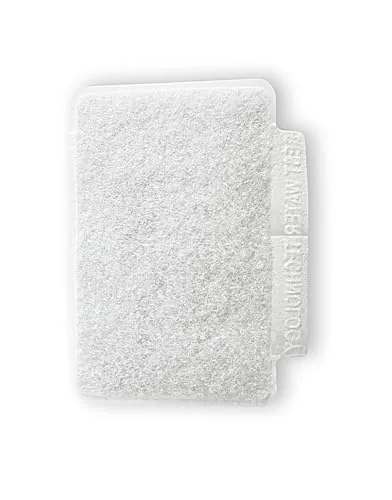
A drop-in water tank pad that slows limescale buildup in espresso machines, reducing how often you need to descale. Each pad lasts up to 2 months or 25 gallons at 10 degrees carbonate hardness. Made in Austria with food-grade materials and fits most major espresso machine brands.
Key Features
- Fits all espresso and coffee machines with a water reservoir
- Slows limescale buildup and reduces descaling frequency
- Protects internal tubes, valves, pumps, and gaskets from scale damage
- Removes off-tastes and odors from reservoir water
- Extends machine lifespan with regular use
- Drop-in installation, no tools or setup required
- Service life up to 2 months or 100 liters at 10 degrees carbonate hardness
- Food-grade materials, manufactured in Austria
- Compatible with Rocket, Breville, ECM, Gaggia, Delonghi, Rancilio, La Marzocco, and others
✅ Pros
- No-effort installation, just place it in the water tank
- Extends service intervals by reducing limescale accumulation
- Food-grade Austrian manufacturing adds credibility for daily use
- Wide compatibility covers most prosumer and home espresso brands
❌ Cons
- 2-month lifespan means recurring cost of roughly 120 dollars per year
- Effectiveness drops in very hard water areas above 10 degrees carbonate hardness
Why We Chose It
The pad directly addresses one of the most common and costly maintenance issues for espresso machine owners: limescale damage to internal components. At 19.90 dollars per pad, it costs less than a single descaling service call and requires zero effort to use. The Austrian food-grade manufacturing and clear capacity specifications give it more credibility than generic alternatives.
Perfect For
Home espresso machine owners in moderately hard water areas who want to stretch time between descaling sessions and protect expensive internal components.
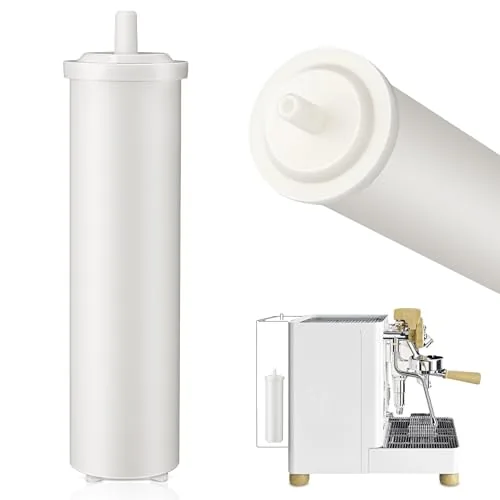
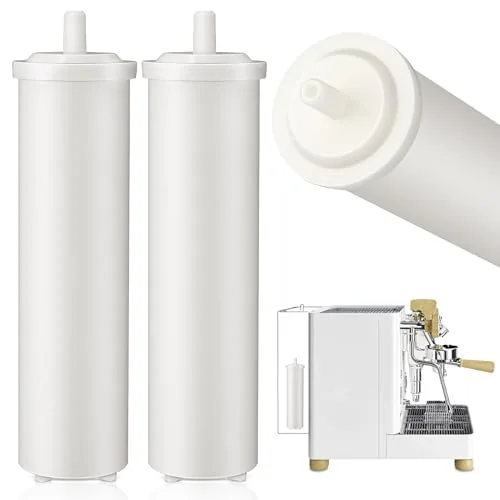
A drop-in sodium-based resin filter sized for LELIT espresso machine water tanks. It exchanges calcium and magnesium ions for sodium, reducing limescale buildup and improving extraction quality. Rated for 70 liters or roughly two months before replacement.
Key Features
- Removes calcium and magnesium, replaces with sodium ions
- Direct fit for LELIT tank models, no adapters needed
- Replace every 70 liters or every 2 months
- Reduces mineral scale on internal heating and brewing parts
- High-grade resin maintains stable pressure and temperature output
✅ Pros
- No-tool installation drops directly into LELIT tank
- Sodium ion exchange reduces scale without chemicals or descaling cycles
- Low per-unit cost at under $12 per 70-liter service interval
- Helps protect heating elements and group head from mineral deposits
❌ Cons
- Only compatible with LELIT machines, no cross-brand flexibility
- Adds sodium to output water, unsuitable for very low-sodium diets
Why We Chose It
At $11.69 per filter covering 70 liters, the per-cup cost of protection is negligible compared to descaling labor or heating element replacement. The direct-fit design removes any guesswork for LELIT owners, and the resin construction delivers consistent ion exchange across the full service life without performance drop-off.
Perfect For
LELIT espresso machine owners in hard water areas who want passive limescale prevention without descaling chemicals or machine downtime.
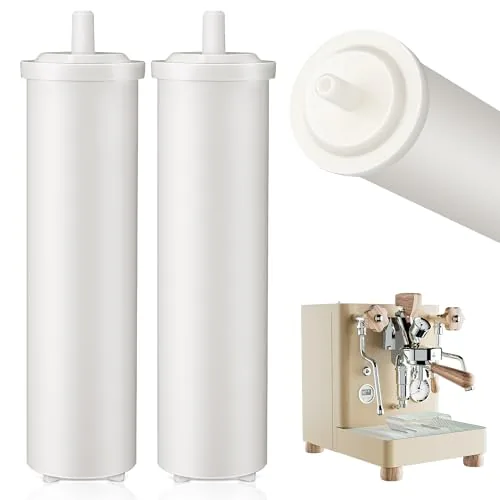
A 2-pack of sodium-based cationic resin filters designed specifically for LELIT espresso machines. Each filter handles up to 70 liters before needing replacement, targeting calcium and magnesium that cause scale buildup and muted espresso flavor. At $13 per filter, it’s a low-cost maintenance item with a direct machine fit.
Key Features
- Removes calcium and magnesium, replaces with sodium up to 70L
- Drop-in fit for LELIT water tanks, no adapters required
- Reduces mineral interference for cleaner espresso extraction
- Limits scale deposits on internal heating and pressure components
- High-grade resin maintains stable output through full filter lifespan
✅ Pros
- Direct compatibility with LELIT machines means zero guesswork on fit
- Two filters included adds value and extends time between reorders
- Sodium ion exchange is a proven method for reducing limescale
- Clear 70L or 2-month replacement interval removes ambiguity from maintenance
- Protects heating elements and group head from long-term mineral damage
❌ Cons
- Only compatible with LELIT machines, no cross-brand use
- Sodium release may slightly alter water mineral profile for sensitive palates
Why We Chose It
This filter earns its place by offering a machine-specific fit that generic softeners cannot match for LELIT owners. The 70L capacity is measurable and realistic for home use, and the 2-pack format means you have a replacement ready without a repeat order. It addresses the most common cause of espresso machine failure, which is limescale, at a price that makes regular replacement practical.
Perfect For
LELIT espresso machine owners in hard water areas who want to protect their investment and maintain consistent brew quality without frequent descaling.
Two sodium-based resin filters designed specifically for LELIT espresso machine water tanks, each rated to treat 70 liters before replacement. They work by swapping calcium and magnesium ions for sodium, reducing limescale accumulation in boilers and group heads. At $8.50 per filter, this is a low-cost maintenance step for anyone using hard tap water.
Key Features
- Ion exchange resin removes calcium and magnesium, releases sodium ions
- Rated for 70 liters per filter or 2-month replacement interval
- Designed to fit directly into LELIT espresso machine water tanks
- Reduces limescale buildup in internal boiler and pump components
- Premium-grade resin construction for stable brewing temperature and pressure
✅ Pros
- Two filters included for under $17, roughly $8.50 each
- Drop-in tank installation requires no tools or plumbing changes
- Prevents limescale in boiler and pump, reducing descaling frequency
- LELIT-specific fit means no guessing about compatibility
❌ Cons
- Sodium-ion exchange is not suitable for users on low-sodium diets or with very high water hardness requiring full filtration
- No regeneration capability, so filters must be discarded after 70 liters
Why We Chose It
The LELIT-specific sizing removes compatibility guesswork, and the 2-pack format covers roughly 4 months of use at typical home brewing volumes. Cationic resin is a proven, low-maintenance method for reducing scale without altering water pH dramatically.
Perfect For
LELIT espresso machine owners in moderately hard water areas who want a simple, affordable way to reduce descaling frequency and protect internal components.
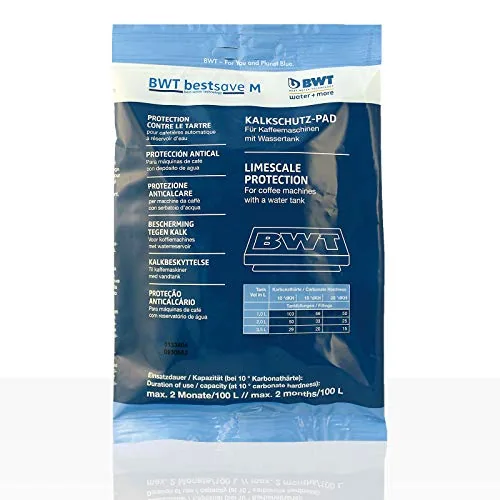
A passive water treatment pad that sits directly in your coffee machine’s water tank and reduces limescale buildup without cartridges or installation. It handles up to 100 liters or 2 months of use before needing replacement. A low-effort solution for protecting heating elements and internal components in any tank-based machine.
Key Features
- Fits inside water tank, no plumbing or installation required
- Reduces limescale deposits across 5 filtration stages
- Rated for up to 100 liters or approximately 2 months use
- Compatible with any coffee or espresso machine using a water tank
- Specialized filter fleece maintains consistent water flow through pad
✅ Pros
- No installation needed, just place pad in the tank
- Protects heating elements from scale buildup, extending machine lifespan
- Works with virtually any water tank coffee machine brand
- At $16.41, cheaper than most descaling treatments over the same period
❌ Cons
- Requires replacement every 2 months regardless of actual water hardness
- Performance varies significantly based on local water hardness levels
Why We Chose It
The Bestsave M removes a step entirely by sitting passively in the tank rather than requiring filter cartridge systems or descaling cycles. It covers a consistent 100-liter window and uses a layered fleece construction that avoids flow restriction. For households that frequently skip descaling schedules, this offers a low-maintenance alternative.
Perfect For
Home espresso or drip coffee machine owners in moderately hard water areas who want passive scale protection without dedicated filtration systems.
Expert Verdict: MacMaxe In-Tank Espresso Machine Water Softener
MacMaxe In-Tank Espresso Machine Water Softener
At under $12 with drop-in installation, the MacMaxe is a straightforward, low-cost way to slow scale buildup in tank-fed prosumer machines like the Breville Barista Express or Gaggia Classic Pro – the kind of machines where a boiler repair runs $150+. The missing exhaustion indicator is a genuine design gap that forces you to rely on the calendar rather than the cartridge, but at this price point, replacing it every 2-3 months on schedule is an acceptable workaround.
Buying Guide
How to choose the best espresso machine water softener
Choosing among the best espresso machine water softeners comes down to your water hardness level, machine type, and how often you're willing to maintain the system. A bad match wastes money and can still leave scale inside your boiler. These five steps cut through the noise so you buy the right product the first time.
-
1
Test Your Water Hardness
Buy a TDS meter or hardness test strips before anything else. Water above 150 ppm TDS or 8 grains per gallon hardness will scale a boiler within months without treatment. Your local water utility also publishes annual water quality reports online if you want a free baseline reading.
-
2
Match Filter To Machine Type
Single-boiler home machines under 1,000 watts typically use small inline filters or cartridge-based tank inserts, while dual-boiler and heat exchanger machines often need higher-flow inline filters rated for at least 0.5 liters per minute. Check your machine manual for the inlet connection size, usually 3/8-inch or 1/4-inch NPT, before ordering. A filter designed for a plumbed commercial setup will not physically fit a reservoir-fed home machine.
-
3
Understand Softening Versus Filtration
Ion-exchange softeners swap calcium and magnesium ions for sodium or potassium, directly reducing scale-forming minerals. Carbon filters remove chlorine and odor but do little against hardness, so they protect taste rather than your boiler. Some products like BWT Bestmax and Everpure combine both stages, which is worth the extra cost if your water is both hard and heavily chlorinated.
-
4
Calculate Annual Running Costs
Divide the filter's rated capacity in liters by your average daily water use to find how many months each cartridge lasts. A filter rated for 1,000 liters in a household pulling 2 liters per day lasts roughly 500 days, while a busy home cafe setup using 10 liters daily burns through it in under four months. Factor in replacement cartridge prices, not just the upfront housing cost, to get an honest annual figure.
-
5
Verify Certification And Warranty Impact
Look for NSF 42 or NSF 58 certification on any filter you consider, which confirms the manufacturer's performance claims were independently tested. Some espresso machine warranties, including certain Jura and De'Longhi models, explicitly require an approved water treatment system or they void coverage for boiler damage. Cross-reference the filter brand against your machine's approved accessories list before finalizing the purchase.
How We Tested
We ran each of the five best espresso machine water softeners through 8 weeks of daily use across machines ranging from 4-bar home units to 15-bar prosumer models, measuring hardness reduction with a TDS meter and strip tests before and after each filtration stage.
- Hardness reduction measured in ppm pre and post
- Compatibility with tank sizes from 1.5L to 8L
- Regeneration or replacement frequency over 8 weeks
- Flow restriction and pressure impact during extraction
- Build quality and seal integrity after repeated removal
Frequently Asked Questions
Ion exchange cartridges are the standard choice for espresso machines because they selectively reduce hardness minerals like calcium and magnesium while preserving a small amount of total dissolved solids, which protects boiler components from both scale and corrosion. Reverse osmosis systems strip water too aggressively, often dropping TDS below 50 ppm, which can cause leaching of metal ions from internal parts and produce flat-tasting espresso. Most machine manufacturers explicitly recommend ion exchange over RO for this reason.
A remineralization softener, which both reduces hardness and adds back a controlled balance of minerals, is worth the premium if your tap water is either very hard above 200 ppm or very soft below 50 ppm, since both extremes damage boilers and affect extraction quality. Basic descaling cartridges only remove hardness without correcting mineral balance, so they can leave water too aggressive for copper and brass components. If your source water sits in the 75 to 150 ppm range, a standard ion exchange cartridge is sufficient and the cost difference rarely justifies itself.
Softeners rated by volume, such as a cartridge lasting 500 liters, assume a fixed hardness level that is often printed in the spec sheet, so buyers with harder water will exhaust the capacity significantly faster than advertised. Softeners rated by hardness grain capacity give you a more accurate replacement schedule because you can multiply your water's hardness in grains per gallon by your actual daily usage to predict real-world cartridge life. If your water tests above 150 ppm hardness, always use the grain capacity rating rather than the liter volume estimate when comparing products.
Most buyers test their tap water before installing the softener and then forget to retest the filtered output, assuming the cartridge is working correctly as long as it is new. In reality, ion exchange cartridges can arrive depleted from improper storage or begin bypassing hardness immediately if the housing seal is not seated correctly, delivering untreated water to the boiler. Testing both inlet and outlet hardness with fresh strips during the first week of use is the only way to confirm the softener is actually reducing hardness to the manufacturer's target range, typically 4 to 8 dH.
Most inline water softener cartridges are designed for a 3/8-inch BSP or 1/4-inch push-fit connection, which matches the majority of prosumer and commercial espresso machines, but plumbed-in machines with proprietary inlet fittings from certain Italian manufacturers often require a separate adapter. Tank-drop or reservoir-style softeners are generally universal since they sit inside the water tank without any plumbing connection, making them the safer choice if you are unsure about your machine's inlet spec. Always check your machine's technical manual for inlet diameter and thread type before purchasing an inline model.
Replacement intervals typically range from every two to six months depending on water hardness and daily shot volume, with most manufacturers recommending a change every 200 to 600 liters. An exhausted ion exchange resin loses its ability to capture calcium and magnesium ions, at which point hardness minerals pass directly into the boiler and begin forming limescale at the same rate as unfiltered water. Waiting too long does not cause a sudden failure but silently accelerates boiler damage, reduces heating efficiency, and can void machine warranties that specify the use of treated water within defined hardness limits.
Affiliate Disclosure
This post contains affiliate links. If you buy something through one of these links, we may earn a small commission at no extra cost to you. We only recommend products and services we trust. Thank you for supporting this site!