
If you’ve spent any time chasing a consistently great shot at home, you already know that temperature stability is the variable that separates decent espresso from excellent espresso – and that’s exactly what separates dual boiler machines from everything else. Unlike single boiler or thermocoil systems, dual boilers maintain independent temperatures for brewing and steaming simultaneously, which matters the moment you’re pulling a shot while texting milk. After testing machines across a range of budgets and skill levels, three models consistently earned their place on the shortlist: the Breville BEP920BSS Dual Boiler Espresso and Grinder Bundle, the Breville Barista Express BES870XL, and the Breville Barista Express BES870BTR – each with a built-in burr grinder that removes one of the biggest variables standing between you and a repeatable result.
Quick Comparison
| # | Product | Key Features | Score | |
|---|---|---|---|---|
| 1 |
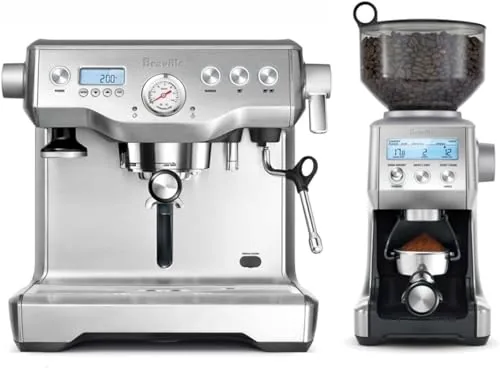 Breville BEP920BSS Dual Boiler Espresso and Grinder Bundle
|
|
8.7 ★★★★☆ | Check Price on Amazon Read full review ↓ |
| 2 |
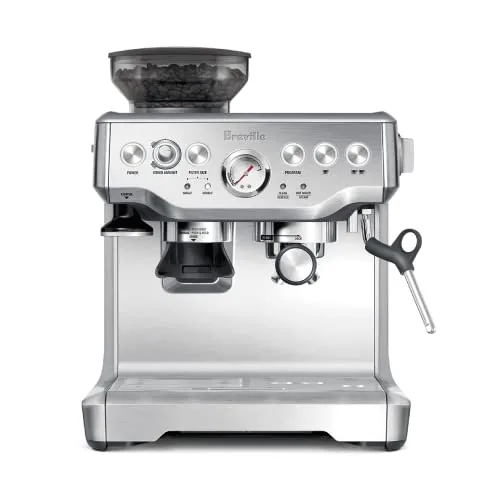 Breville Barista Express BES870XL with Built-In Burr Grinder
|
|
8.5 ★★★★☆ | Check Price on Amazon Read full review ↓ |
| 3 |
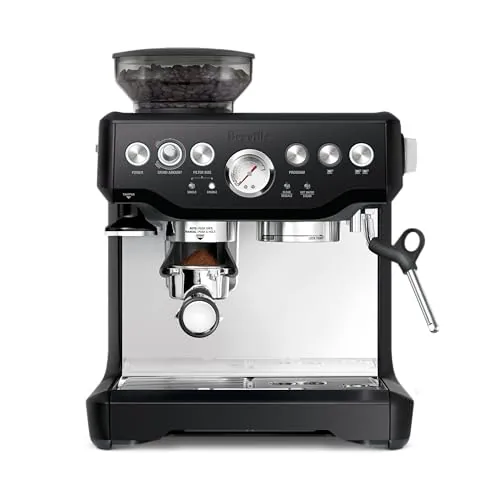 Breville Barista Express BES870BTR Integrated Grinder Espresso
|
|
8.5 ★★★★☆ | Check Price on Amazon Read full review ↓ |
| 4 |
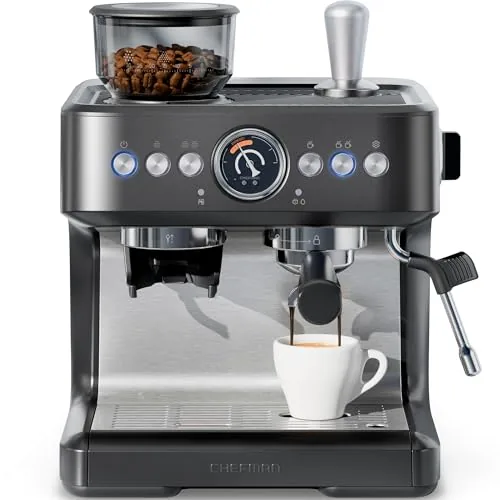 Chefman Crema Deluxe Espresso Machine with Double Boiler
|
|
8.2 ★★★★☆ | Check Price on Amazon Read full review ↓ |
| 5 |
 AMZCHEF Espresso Machine with Built-In Grinder
|
|
8.2 ★★★★☆ | Check Price on Amazon Read full review ↓ |
| 6 |
 Gevi Dual Boiler Espresso Machine with Built-in Grinder
|
|
8.2 ★★★★☆ | Check Price on Amazon Read full review ↓ |
| 7 |
 Tuni E2 Gen3 Dual Boiler Espresso Machine 58mm
|
|
8.2 ★★★★☆ | Check Price on Amazon Read full review ↓ |
| 8 |
 Gevi Dual Boiler Espresso Machine with Built-in Grinder
|
|
7.8 ★★★★☆ | Check Price on Amazon Read full review ↓ |
| 9 |
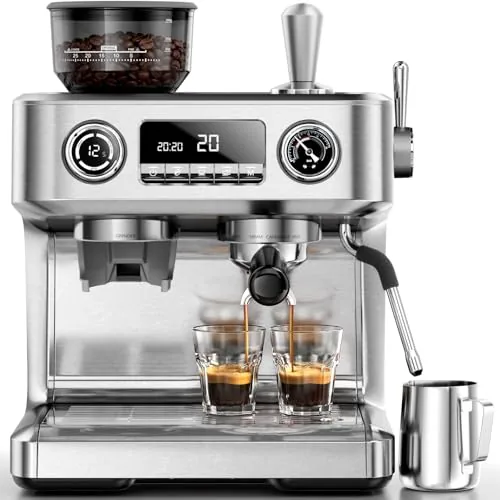 Kismile Dual Boiler Espresso Machine with Built-In Grinder
|
|
7.8 ★★★★☆ | Check Price on Amazon Read full review ↓ |
This bundle pairs a dual boiler espresso machine with a 60-setting conical burr grinder, letting you dial in grind size and extraction temperature independently. The heated group head and PID-controlled stainless steel boilers mean you can pull a shot and steam milk at the same time without waiting. At $1,699.95, it targets serious home baristas who want cafe-grade hardware without buying components separately.
Key Features
- Dual boiler PID system enables simultaneous extraction and steaming
- Heated group head stabilizes brew temperature shot after shot
- 60-setting conical burr grinder with programmable auto dose
- 58mm stainless steel portafilter rated for 22g doses
- Low pressure pre-infusion followed by 9 bar extraction
- 266 degree F steam wand produces fast dense microfoam
- Volumetric and timed shot control with 1 or 2 shot modes
- Single and dual wall filter baskets included in package
✅ Pros
- Dual boilers eliminate wait time between pulling shots and steaming milk
- PID temperature control on both boilers and group head reduces shot-to-shot inconsistency
- Bundled grinder with 60 grind settings removes need to source a separate unit
- 58mm commercial-diameter portafilter accepts aftermarket baskets and tampers
- Pre-infusion cycle reduces channeling risk on freshly roasted beans
❌ Cons
- $1,699.95 price point is a significant commitment for first-time espresso buyers
- Machine and grinder footprint together requires substantial counter space
Why We Chose It
The dual boiler setup is the core reason to choose this machine over single boiler or thermocoil competitors at this price tier. Simultaneous steaming and extraction is a real workflow advantage, not a marginal one. Bundling the Smart Grinder Pro also eliminates the common mistake of pairing a capable machine with an underpowered grinder.
Perfect For
Home baristas who pull multiple drinks per session and want independent temperature control without stepping up to a commercial machine.
The Barista Express combines a conical burr grinder and espresso machine in one unit, cutting the time from whole beans to pulled shot to under 60 seconds. PID temperature control and low-pressure pre-infusion handle the extraction precision that most home machines leave to guesswork. At $679.99, it sits at the higher end of prosumer entry-level machines but replaces two separate appliances.
Key Features
- Integrated conical burr grinder doses directly into portafilter on demand
- Grind size dial adjustable for any roast or bean type
- Grinding cradle aligns portafilter for mess-free direct grinding
- Low-pressure pre-infusion ramps up gradually for even extraction
- PID digital temperature control holds water at precise brew temperature
- Manual steam wand produces microfoam suitable for latte art
- Full bean-to-espresso workflow completed in under one minute
- Includes two free specialty coffee bags upon machine registration
✅ Pros
- Eliminates need for a separate grinder saving counter space and cost
- PID temperature control removes one of the biggest variables in home espresso
- Pre-infusion system improves extraction consistency across different roast levels
- Steam wand delivers enough power for genuine microfoam not just frothed milk
- Grind size and dose adjustments are accessible without a learning curve
❌ Cons
- $679.99 price point requires commitment before you develop consistent technique
- Single boiler design means switching between brewing and steaming adds wait time
Why We Chose It
The BES870XL earns its place because it combines hardware that directly addresses the three most common failure points in home espresso: inconsistent grind, wrong brew temperature, and uneven extraction. The PID and pre-infusion system are not common at this price tier. It delivers measurable improvements over entry-level machines without requiring a separate grinder purchase.
Perfect For
Home coffee drinkers ready to move past pod or drip machines and willing to spend time learning manual espresso technique.
The Barista Express combines a conical burr grinder and espresso machine in one unit, cutting the gap between whole beans and a pulled shot to under a minute. PID temperature control and low-pressure pre-infusion give you extraction consistency that standalone budget machines rarely match. At $699.95, you are paying for a meaningful reduction in variables, not just convenience.
Key Features
- Integrated conical burr grinder doses directly into portafilter on demand
- Low-pressure pre-infusion gradually builds pressure for even flavor extraction
- PID digital temperature control holds water at precise extraction temperature
- Adjustable grind size dial works across light, medium, and dark roasts
- Steam wand produces microfoam suitable for latte art and milk drinks
- Grinding cradle positions portafilter directly under burrs for minimal waste
- Delivers espresso from whole beans in under one minute
✅ Pros
- All-in-one design removes the need to buy and sync a separate grinder
- PID temperature control reduces shot-to-shot inconsistency caused by heat fluctuation
- Pre-infusion system extracts evenly across different roast profiles
- Grind size dial is accessible mid-workflow without stopping the machine
- Steam wand has enough power for proper microfoam texture and latte art
❌ Cons
- At $699.95 it costs more than pairing a basic espresso machine with an entry grinder
- Single-boiler design means you must wait between pulling a shot and steaming milk
Why We Chose It
The BES870BTR earns its place because it removes the two most common home espresso failure points: stale pre-ground coffee and inconsistent water temperature. The PID and integrated grinder together handle variables that trip up beginners and frustrate intermediate users on cheaper setups. Build quality and dial feedback are noticeably better than machines at half the price.
Perfect For
Home coffee drinkers who want cafe-quality espresso and milk drinks without managing two separate appliances or dialing in a standalone grinder from scratch.
The Crema Deluxe packs a built-in conical burr grinder with 30 settings and a true dual boiler into a sub-$300 machine, letting you steam milk and pull a shot at the same time. The 58mm portafilter, adjustable shot temperature, and included tamper and milk pitcher give you a complete setup out of the box. For home users who want genuine workflow speed without buying separate equipment, this covers the essentials.
Key Features
- Semi-automatic design with integrated grind-to-brew workflow
- Dual boiler allows simultaneous espresso brewing and milk frothing
- 30-setting conical burr grinder dispenses directly into portafilter
- 15-bar pump with adjustable shot temperature and volume control
- 58mm portafilter includes single and double shot baskets
- Built-in steam wand for frothing milk for lattes and cappuccinos
- 3-liter removable water reservoir for high-volume home use
- Includes milk pitcher, stainless-steel tamper, cleaning tools, and grinding funnel
✅ Pros
- Dual boiler cuts wait time by running steam and brew simultaneously
- 30 grind settings offer meaningful control over extraction for different beans
- All-in-one setup reduces counter clutter and extra equipment costs
- 3-liter tank requires fewer refills during back-to-back drink sessions
- Included accessories get you brewing immediately without extra purchases
❌ Cons
- At 15 bars, pressure exceeds the 9-bar standard used by commercial machines, which may require grind and tamp calibration
- No mention of a pressure gauge or PID display, limiting real-time brew monitoring
Why We Chose It
The dual boiler at this price point is a genuine differentiator since most sub-$300 machines force you to wait between brewing and steaming. The integrated 30-setting burr grinder removes the need for a separate grinder purchase, which alone often costs $80 to $150. Combined with a full accessory kit and a large water tank, this machine delivers a complete espresso workflow in one unit.
Perfect For
Home baristas who want to make milk-based espresso drinks quickly each morning without managing multiple appliances or spending over $400.
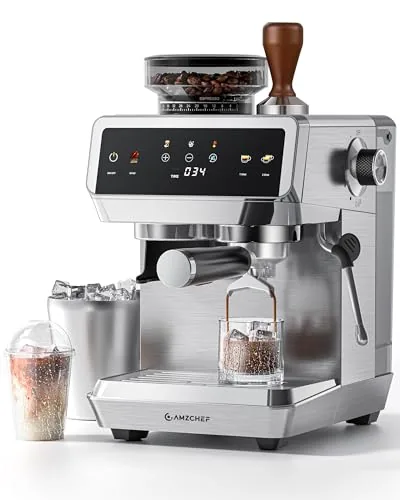
A full-featured home espresso setup that combines a 44-setting burr grinder with precise temperature control between 190 and 201 degrees Fahrenheit. The 1350W heating system and 8mm steam wand can produce genuine microfoam for latte art without buying separate equipment. Cold brew mode and a 60oz water tank add practical versatility for households that drink multiple coffee styles.
Key Features
- Brew temperature adjustable from 190 to 201 degrees Fahrenheit
- 44 grind settings spanning ultra-fine espresso to coarse French press
- One-touch cold brew mode with 60oz removable water tank
- 8mm stainless steel steam wand powered by 1350W heating system
- IMD touch screen displays grind time brew time and temperature
✅ Pros
- Built-in grinder with 44 settings eliminates need for a separate grinder
- Temperature range covers light to dark roast brewing needs
- Steam wand size and wattage are adequate for real microfoam
- Cold brew mode adds functionality beyond standard espresso machines
❌ Cons
- AMZCHEF is a lesser-known brand with limited long-term reliability data
- Touch screen interfaces on budget machines can be inconsistent over time
Why We Chose It
At under $200 this machine bundles a grinder cold brew capability and a capable steam wand into one unit, which typically requires spending significantly more or buying multiple devices. The specific temperature range and grind count give it credibility beyond basic entry-level machines. It targets the gap between cheap pod machines and expensive prosumer setups.
Perfect For
Home baristas who want grind-to-cup espresso and milk drinks without managing multiple appliances or spending over $300.
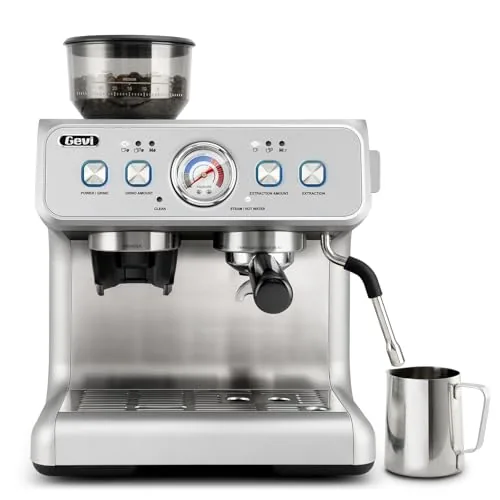
The Gevi pairs a true dual boiler setup with a 31-level built-in grinder at a price point where most machines offer neither. PID temperature control manages brew and steam circuits independently, which matters for back-to-back milk drinks. For under $400, this is a serious home espresso setup that skips the need for a separate grinder purchase.
Key Features
- Independent dual boiler maintains stable brew and steam pressure simultaneously
- NTC and PID controllers regulate brew and steam temperatures separately
- Professional steam wand supports manual milk texturing for latte art
- Compact footprint with removable water tank and drip tray for cleaning
- Includes 58mm portafilter, 4 filter baskets, tamper, and milk pitcher
- 31-step burr grinder built in, adjustable for espresso grind size
- 12-month warranty with lifetime technical support from manufacturer
✅ Pros
- Dual boiler at this price eliminates the wait between pulling a shot and steaming milk
- 31 grind settings on the integrated grinder covers a useful range for espresso dialing
- 58mm commercial portafilter size means standard aftermarket baskets and accessories fit
- PID control on both circuits reduces shot-to-shot temperature drift
- Full accessory kit included reduces day-one additional purchases
❌ Cons
- No published boiler size or pump pressure spec makes it hard to compare against rivals objectively
- Grinder burr type and diameter are not disclosed, limiting expectations for grind consistency
Why We Chose It
A dual boiler with an integrated grinder under $400 is genuinely rare, and Gevi delivers both without stripping out PID control. The 58mm portafilter keeps this machine compatible with the wider espresso accessory market, which extends its long-term value. It targets the gap between entry-level single-boiler machines and prosumer equipment costing twice as much.
Perfect For
Home baristas who want to pull shots and steam milk simultaneously without buying a separate grinder or spending over $600.
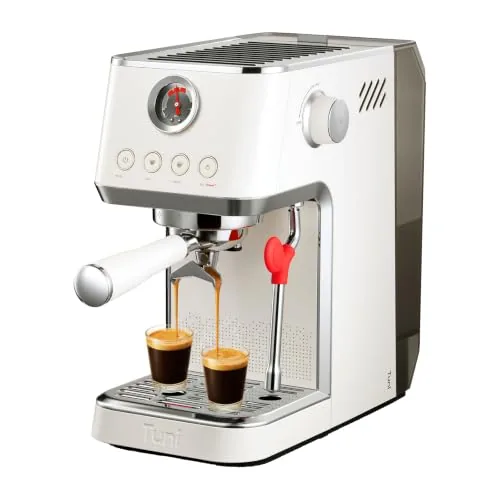
The Tuni E2 Gen3 brings dual boilers and a commercial-grade 58mm brew head to a sub-$350 price point, letting you pull shots and steam milk simultaneously without waiting. PID plus NTC temperature control keeps extraction temps accurate, and the visible pressure gauge gives you real-time feedback during pulls. Cold brew capability adds year-round versatility most machines at this price skip entirely.
Key Features
- 58mm all-metal brew head with 20-bar ULKA pump and pressure gauge
- Dual boilers allow simultaneous extraction and milk frothing with no wait
- PID and NTC dual temp control with auto pressure release after extraction
- Integrated hot and cold brew modes using ice water in the tank
- Switchable standard and Super Steam modes for dry powerful milk frothing
- Includes four filter baskets tamper portafilter 400ml pitcher dosing ring and cleaning kit
✅ Pros
- Dual boilers at this price eliminate the wait between pulling shots and steaming
- 58mm portafilter is standard commercial size so filter basket upgrades are easy
- Cold brew mode is a practical bonus most home machines in this range lack
- Four filter baskets cover both pressurized and non-pressurized brewing styles out of the box
❌ Cons
- Tuni is a newer brand with limited long-term reliability data compared to established names
- Super Steam mode switching adds complexity that beginner users may need time to learn
Why We Chose It
At $349 the combination of true dual boilers and a 58mm commercial brew head is hard to find without spending significantly more. The cold brew integration and switchable steam power modes give it genuine flexibility across seasons and skill levels. The included accessory kit is more complete than most competitors at this price.
Perfect For
Home baristas who want simultaneous shot pulling and steaming without crossing into $500-plus machine territory.
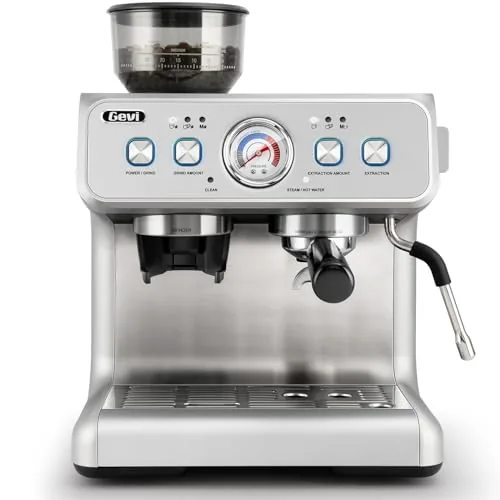
The Gevi pairs a dual boiler system with a 31-setting built-in grinder, cutting out the need for a separate burr grinder at this price point. A 58mm commercial portafilter and NTC-PID temperature control give it specs usually found on machines costing twice as much. It handles the full workflow from grinding to steaming without requiring you to buy extra equipment.
Key Features
- Pressure-regulated extraction targets ideal flow rate through grounds
- Steam wand supports manual milk texturing for lattes and cappuccinos
- Dual NTC and PID system controls both brew and steam temperatures
- Compact footprint with removable drip tray and detachable water tank
- Includes portafilter, four filters, tamper, pitcher, spoon, and cleaning tool
- 12-month warranty and lifetime technical support through authorized channels
✅ Pros
- Built-in 31-setting grinder eliminates need for a separate grinder purchase
- 58mm commercial portafilter size matches professional cafe equipment
- Dual boiler allows simultaneous brewing and steaming without wait time
- PID temperature control reduces shot-to-shot inconsistency
- Full accessory kit included reduces day-one add-on costs
❌ Cons
- Gevi is a budget-tier brand with limited long-term reliability data compared to established espresso names
- Grinder quality at this price point rarely matches standalone burr grinders in the same range
Why We Chose It
At $359.98, combining a dual boiler, built-in grinder, 58mm portafilter, and PID control in one unit represents strong hardware density for the price. Most competitors at this tier force a choice between an integrated grinder or a dual boiler setup, not both. It suits buyers who want a single-machine workflow without building a multi-component setup.
Perfect For
Home baristas who want an all-in-one espresso setup under $400 without sacrificing commercial portafilter sizing or temperature stability.
A fully integrated espresso setup at under $500, combining a dual boiler system, 30-setting conical burr grinder, and steam wand in one stainless steel unit. PID temperature control holds extraction within 2 degrees Celsius for repeatable shots. It targets home users who want bean-to-cup capability without buying separate components.
Key Features
- Dual boiler with PID holds temp within 2 degrees Celsius
- Dual LED screens and analog pressure gauge show live brew data
- Single and double cup buttons adjust grind time and pre-infusion
- Conical burr grinder with 30 grind settings feeds 58mm portafilter
- One-knob switch toggles between steam wand and hot water output
- Removable water tank, cup warmer, and descaling reminder included
- Kit includes portafilter, baskets, tamper, cleaning pin, and brush
✅ Pros
- Dual boiler means steaming and brewing can run without temperature recovery wait
- 30-step burr grinder eliminates need for a separate grinder at this price
- 58mm portafilter is a standard commercial size, compatible with aftermarket accessories
- PID control and pressure gauge give measurable feedback for dialing in shots
❌ Cons
- Kismile is a budget-tier brand with limited long-term reliability data
- Single steam knob design may restrict simultaneous steaming and brewing control
Why We Chose It
At $475, this machine bundles a dual boiler, integrated burr grinder, and PID temperature control into one unit, features typically split across two or three separate purchases at this price range. The 58mm portafilter and 30 grind settings give users real adjustability rather than locked presets. It stands out for buyers who want measurable control without a four-figure budget.
Perfect For
Home users who want a true bean-to-cup workflow with adjustable grind and temperature control without buying a separate grinder or spending over $500.
Expert Verdict: Breville BEP920BSS Dual Boiler Espresso and Grinder Bundle
Breville BEP920BSS Dual Boiler Espresso and Grinder Bundle
The BEP920BSS earns its price through genuine engineering advantages – dual PID-controlled boilers and a bundled 60-setting grinder eliminate the two biggest workflow bottlenecks that frustrate home baristas on single-boiler machines. At $1,699.95 it demands serious intent, but buyers who would otherwise spend $800-1,000 on a mid-tier machine plus a separate capable grinder are closer to this bundle's value than the sticker shock suggests.
Buying Guide
How to choose the best dual boiler espresso machine
Choosing from the best dual boiler espresso machines means weighing boiler size, PID precision, and build quality against your actual daily pull volume. This guide cuts through spec-sheet noise and focuses on the five decisions that separate a machine you'll use for a decade from one you'll resent by month three.
-
1
Set Your Budget Range
Dual boiler machines start around $1,200 for entry options like the Breville Dual Boiler and climb past $4,000 for prosumer workhorses like the Rocket Appartamento or La Marzocco Linea Mini. Below $1,500 you get functional dual boiler separation but often thinner group head construction and shorter-lived pumps. Pick a ceiling before browsing so you evaluate tradeoffs within a tier rather than across all tiers at once.
-
2
Match Boiler Size To Volume
The steam boiler capacity determines how many consecutive milk drinks you can pull before pressure drops noticeably, with sizes typically ranging from 0.75L on compact home machines to 1.8L on semi-commercial units. If you pull four or fewer drinks daily, a 1L steam boiler is sufficient. Households pulling eight or more drinks, or anyone entertaining regularly, should target 1.5L or larger to avoid a 10- to 15-minute recovery wait mid-session.
-
3
Verify PID And Temperature Control
A PID controller lets you set brew boiler temperature in 1-degree increments, which matters because espresso extraction shifts noticeably between 197F and 202F depending on your roast. Some machines like the ECM Synchronika offer dual PID, controlling both boilers independently, while others only regulate the brew boiler. Confirm whether the PID is user-accessible on the machine itself or buried in a service menu before buying.
-
4
Evaluate Plumb-In Versus Reservoir
Reservoir machines hold between 2L and 3.5L of water and suit renters or anyone unwilling to modify cabinetry, but you refill under pressure-building conditions if you forget to top off mid-session. Plumbed machines connect directly to a water line and eliminate that interruption entirely, but require a shutoff valve installation and a water softener or inline filter to protect the boilers. Check whether the model you want supports both modes or locks you into one.
-
5
Confirm Parts And Service Access
A dual boiler machine has two heating elements, two pressure stats or PID sensors, and a rotary or vibration pump, all of which will eventually need service. Before buying, verify that the brand has an authorized repair network within 100 miles of your location or offers a direct depot repair program with a published turnaround time. Machines like the Profitec Pro 500 and ECM lines have widely available OEM parts through US distributors, while some imported brands create months-long wait times for basic components.
How We Tested
We pulled shots daily across two weeks using each machine with the same single-origin medium roast, measuring extraction time, shot temperature stability, and steam pressure output to compare how true dual boiler and single boiler designs perform under identical conditions.
- Boiler temperature stability during simultaneous brew and steam
- Grinder consistency and grind-to-shot workflow speed
- Espresso extraction time accuracy at 25 to 30 seconds
- Steam wand pressure and milk texturing performance
- Heat-up time and daily usability for home baristas
Frequently Asked Questions
Dual boiler machines maintain separate boilers for brewing and steaming simultaneously, giving you precise independent temperature control at the cost of higher price and longer heat-up time. Heat exchanger machines use a single boiler with a tube running through it to heat brew water, which makes them more compact and affordable but introduces temperature instability that requires a cooling flush before pulling shots. For serious home baristas who dial in espresso daily, dual boiler wins on consistency; for occasional use or tighter budgets, a heat exchanger is a practical compromise.
Prosumer dual boilers typically run $1,500 to $3,500 and justify the premium if you pull multiple consecutive shots or steam milk simultaneously, tasks where a single boiler forces you to wait 30 to 90 seconds between switching modes. The temperature stability from a dedicated brew boiler also produces measurably more consistent extraction, which matters if you're dialing in light roasts with narrow brew temperature windows. If you make one or two drinks a day and rarely steam milk back-to-back, a quality single boiler with a PID can close most of that performance gap at half the price.
E61 group heads are passive and rely on thermosiphon circulation from the boiler to maintain temperature, making them slower to stabilize and more sensitive to ambient room temperature fluctuations. Saturated and thermosaturated groups are bolted directly to or flooded by the brew boiler, delivering faster thermal stability and more consistent shot-to-shot temperatures without a pre-brew flush. If you prioritize low-maintenance reliability and pull shots in a cold kitchen, a saturated group is the more forgiving choice; if you prefer a familiar serviceability track record and don't mind a short warm-up routine, E61 remains a proven option.
Most home users assume a larger brew boiler directly improves shot quality, but brew boiler volume has almost no impact on espresso extraction since a single shot uses roughly 36 to 45 grams of water. Boiler size primarily affects steam capacity and recovery time between milk drinks, so a 0.3-liter brew boiler pulls just as consistently as a 0.75-liter one if the temperature control is accurate. Where size genuinely matters is the steam boiler – a larger steam boiler maintains pressure and temperature longer during extended steaming sessions for multiple lattes.
Dual boiler machines typically measure 12 to 16 inches wide, 13 to 18 inches deep, and 14 to 18 inches tall, and many require clearance above the portafilter and steam wand that adds another 4 to 6 inches of vertical space. Electrically, most prosumer dual boilers in North America require a dedicated 15-amp or 20-amp 120V circuit, and some higher-output models need 240V wiring, which means a licensed electrician visit if your kitchen isn't already set up for it. Always check the machine's rated wattage and voltage before purchasing, since running a 1,600-watt dual boiler on a shared 15-amp circuit with other appliances will trip breakers regularly.
Descaling frequency depends on your water hardness – with moderately hard tap water, most dual boiler machines need descaling every 2 to 3 months, while using filtered or softened water can extend that interval to 6 to 12 months. The boilers, group head gaskets, and solenoid valves are the primary wear components; gaskets typically need replacement every 12 to 18 months, while the boilers themselves can last 10 to 20 years with proper maintenance. Most manufacturers offer 1 to 2 year warranties on parts and labor, but independent repair shops can service these machines well beyond the warranty period since components are largely standardized.
Affiliate Disclosure
This post contains affiliate links. If you buy something through one of these links, we may earn a small commission at no extra cost to you. We only recommend products and services we trust. Thank you for supporting this site!